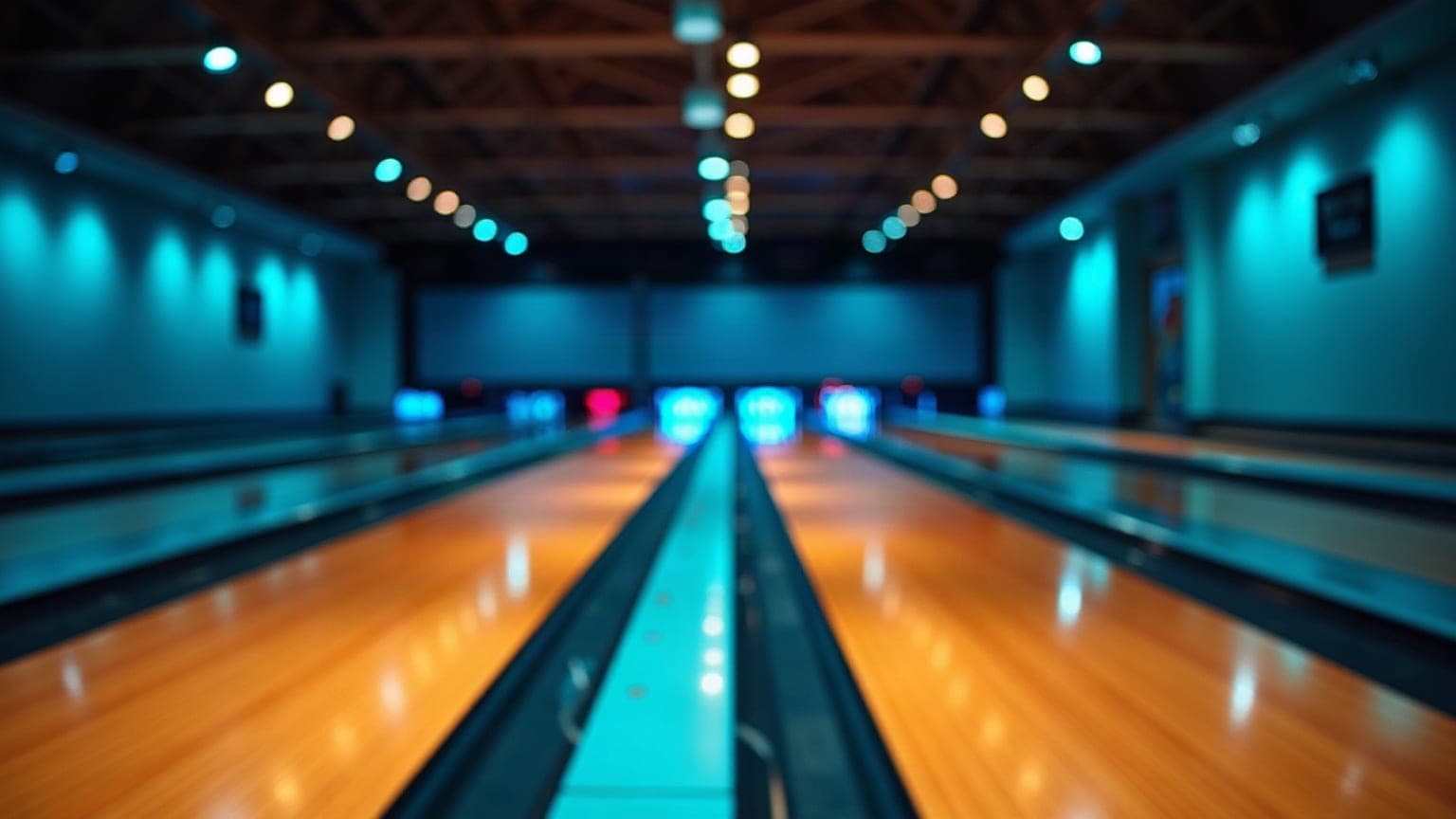
The short answer: duckpin bowling uses a smaller ball you hold in your palm instead of your fingers, shorter and squatter pins, and three rolls per frame instead of two, which makes it easier to pick up but harder to bowl a strike in. Ten-pin bowling is the format most people mean when they just say "bowling": a heavier ball with finger holes, taller pins, and two rolls per frame. Both are real, distinct games with their own scoring and their own rhythm, and the difference matters if you're deciding where to spend an evening in the New Orleans area, where the two formats are not evenly available.
Ball size and weight
The most obvious difference is what you're holding. A duckpin ball is small enough to fit in one hand, with no finger holes at all, so there's no drilling, no fitting and no learning a finger-hole grip before your first frame. A ten-pin ball, by comparison, is noticeably larger and heavier, and is gripped with two or three fingers pushed into holes drilled for that specific ball.
That single difference changes how the game feels in your hand before you ever release it. A duckpin ball is light enough that a child, a first-timer, or someone with a shoulder or wrist that doesn't love a heavier swing can hold and roll it comfortably. A ten-pin ball's weight and finger-hole grip take more strength and more technique to control, which is part of why ten-pin has a steeper learning curve for a beginner's very first game.
Pin shape
Duckpin pins are shorter and squatter than standard ten-pins, closer in proportion to a small bowling ball than to the tall, narrow-waisted pins you'd picture from a typical bowling alley. Ten-pins are taller, heavier, and have more surface for a ball to make solid contact with on the way past.
That shape difference is not cosmetic. A shorter, squatter pin has a lower center of gravity and less pin to hit, so it takes a more precise, more solidly-placed shot to knock it down and send it into its neighbors. Ten-pins, being taller and lighter relative to the ball that hits them, fall and carry into each other more readily once a ball finds them.
Rolls per frame
Duckpin bowling gives each player three rolls per frame instead of ten-pin's two. That extra roll is built into the game specifically because a smaller, lighter ball moving fewer, smaller pins needs another chance to clear what's left standing — without it, duckpin scores would be far lower than ten-pin's, rather than roughly comparable over a full game.
The extra roll changes the pace, too. A duckpin frame usually takes a little longer to play out than a ten-pin frame, since there's a third ball to set up and throw even when the first two didn't finish the job. Over a full game that adds up to a slower overall pace, which is part of what makes duckpin read as the more casual, more social version of bowling rather than the more athletic one.
How scoring actually differs
Both games score the same way at the top level: pins knocked down add to your frame, a spare or a strike earns a bonus based on what you roll next, and ten frames make a full game. Where they diverge is in the mechanics behind those numbers, because duckpin's three-roll frame changes what a spare and a strike actually require.
In ten-pin, a strike is all ten pins down on the first of two rolls, and a spare is all ten down across both rolls. In duckpin, a strike is still all pins down on the first roll, but a spare can be earned across two rolls or the pins can be cleared entirely across all three, which some scoring conventions call differently depending on the house rules being used. The practical effect is that a duckpin frame has more ways to end without a leftover pin than a two-roll frame does, even though each individual roll is less likely to be devastating.
Because the ball and pins are smaller and lighter, individual duckpin rolls tend to move less total pin action per throw, so scores accumulate more gradually across a game than they typically would rolling ten-pin with the same skill level. None of that makes one game's score more "real" than the other's — they're simply not directly comparable numbers, since they're produced by different equipment and different rules. Someone comparing a 150 in ten-pin to a 150 in duckpin is comparing two different games that happen to share a scoreboard format.
Why duckpin is harder to strike — and easier for kids to pick up
These two things sound contradictory, but they come from the same equipment differences, and they're both true at once.
The strike is genuinely harder
A ten-pin strike relies on a heavy ball carrying enough force and the right angle into the pins that they cascade into each other and clear the deck. A duckpin ball is lighter and smaller, so a single throw simply has less energy and less contact area to work with, and the smaller, squatter pins don't fall and chain into their neighbors as reliably as taller ten-pins do. That's the entire reason the extra third roll exists: without it, clearing all the pins in a frame would be rare enough to make the game far less satisfying to play.
Experienced ten-pin bowlers who try duckpin for the first time are often surprised at how often a well-placed shot leaves two or three pins standing that a similar ten-pin shot would have carried away. It isn't a sign of a bad throw — it's the equipment doing what it's built to do, and it's a big part of why duckpin rewards patience and repetition over raw power.
It's a more forgiving first game
The flip side is what makes duckpin such a comfortable starting point for kids or for anyone bowling for the very first time. There's no finger-hole ball to fit or drill, so there's no waiting around for the right ball size, and no risk of a ball that's gripped wrong slipping badly on release. The ball's light enough that a small child can pick it up, carry it to the line, and roll it with both hands if a one-handed swing isn't comfortable yet, without needing the arm strength a full-size ten-pin ball calls for.
Because the stakes of "getting a strike" are lower and the third roll gives everyone another shot at the pins left standing, duckpin also tends to feel less discouraging for a beginner than a ten-pin game where a poor first roll can leave a genuinely hard spare. That combination — light equipment, an easy grip and a built-in second chance — is a real part of why family groups and first-time bowlers often find duckpin the more approachable of the two games, even though it's the harder one to master at a high level.
Where each game came from
Both formats have real histories, though only one of them is the game most people picture when they hear the word "bowling."
Duckpin's Baltimore-area roots
Duckpin bowling is generally understood to have developed in the Baltimore, Maryland area in the early 1900s, as a smaller-scale variation on the pin bowling already popular at the time. The name itself is commonly explained as a reference to the way the shorter pins, when hit, were thought to scatter the way ducks take flight — a colorful bit of bowling folklore more than a documented fact, but one repeated widely enough that it's part of the game's identity. From there it spread mainly through the mid-Atlantic and parts of the Northeast, staying a regional variation rather than becoming the national standard.
Ten-pin as the standard modern game
Ten-pin bowling, using the taller pin and larger ball most people associate with a bowling alley, became the dominant, standardized version of the sport across the United States over the twentieth century. It's the format built into nearly every modern bowling center, the one used in professional and league bowling, and the one most people learn first simply because it's the version available almost everywhere. When someone says they're "going bowling" without any other context, ten-pin is almost always the safe assumption.
Where you'll actually find each game today
Ten-pin is, by a wide margin, the more common format nationally: it's what most bowling centers install, what most leagues run, and what most people have actually played. Duckpin bowling is far less common overall, and where it does exist, it tends to be concentrated in venues connected historically to its mid-Atlantic and Northeast roots, rather than spread evenly across the country.
That regional concentration is exactly why finding duckpin bowling outside those pockets can take more looking than finding a standard bowling alley does. A newer venue that offers duckpin bowling alongside other activities, rather than as its whole identity, is doing something genuinely a little different from the default bowling-alley model — worth knowing if a smaller ball and a faster-changing frame sound like the more fun night out.
Bowling in the New Orleans area: duckpin or ten-pin?
Every bowling venue in the wider New Orleans area whose own website was checked for this guide describes standard ten-pin bowling: GameOn Social Hub in Kenner, Surge Entertainment in Metairie, Fulton Alley in the Warehouse District, Colonial Bowling Lanes in neighboring Harahan, and Rock'n'Bowl in Mid-City. None of their own sites mention duckpin bowling specifically — which isn't a claim that duckpin doesn't exist anywhere in the city, only that it doesn't turn up as an offering on any of those five venues' own pages.
Pickle N Pins, in Metairie, offers duckpin bowling as one of its activities alongside pickleball, padel, axe throwing, Krazy Darts and shuffleboard. If a smaller ball, shorter pins and three rolls a frame sound like the more approachable or more social version of the two games described above, that's a real, checkable point of difference from the ten-pin lanes listed here, not a marketing claim. Lanes can be booked online ahead of a visit, and the activities page has the current rundown of everything on site. For a deeper first-timer's walkthrough of duckpin specifically — how a visit actually runs, what to wear, what to expect from your first frame — see What Is Duckpin Bowling? A Full Guide for First-Timers; this guide is deliberately the head-to-head comparison rather than a repeat of that ground. Anyone who wants duckpin to become a standing weekly thing rather than a one-off visit can look at leagues for options beyond booking a lane fresh each time.
Anyone weighing a wider night out beyond just bowling, with several activities under one roof, may also want Family Entertainment Centers in Jefferson Parish, which looks at venues built around more than one activity rather than bowling alone, or the broader Things to Do in Metairie guide for everything else nearby. And if a specific evening is more about pricing than format, pricing covers current rates for every activity rather than repeating a number here that could go stale.
The bottom line
Duckpin and ten-pin are genuinely different games wearing the same "bowling" name: a smaller, handheld ball and shorter pins against a heavier, finger-holed ball and taller pins, three rolls a frame against two, and a slower, more forgiving pace against a game that rewards more power and more precision per throw. Neither one is the "real" version — they're just built differently, and each rewards a slightly different kind of player.
If the plan is a standard, familiar bowling night, any of the ten-pin venues in the New Orleans area covers that well. If the appeal is trying the smaller-ball, three-roll version, or introducing a young kid to bowling without a heavy finger-hole ball in the mix, Pickle N Pins' duckpin lanes are a genuine, checkable option in an area where none of the other bowling venues' own sites mention offering it. Either way, the honest answer is to pick the format that matches what you actually want out of the evening, book a lane, and go find out which one you like more.