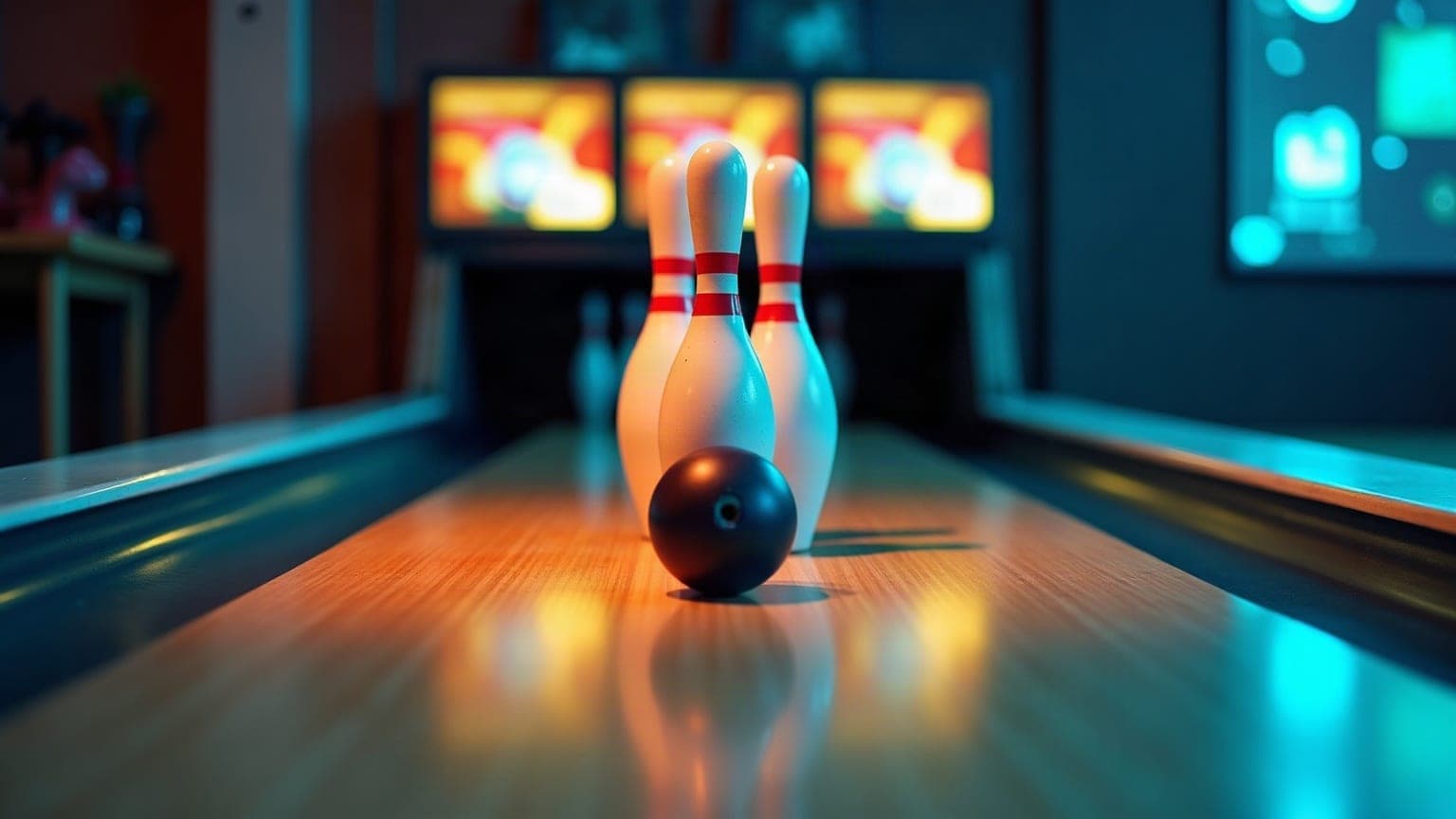
Duckpin bowling is a variation on standard ten-pin bowling that swaps the full-size ball for a smaller one with no finger holes and replaces the tall ten-pins with shorter, squatter pins. Because the smaller ball makes it much harder to knock down every pin in one throw, each frame gives you three rolls instead of two. It looks almost like a scaled-down version of the game most people grew up with, but the smaller equipment changes the physics enough that it plays like its own sport, one you can try at Pickle N Pins in Metairie or at a scattering of other lanes around the country.
Where duckpin bowling came from
Duckpin bowling traces back to the early 1900s, and Baltimore is the city most often credited with inventing it, though several New England towns make a similar claim and the exact origin is genuinely murky. The name itself comes from an often-repeated bit of bowling folklore: pins scattering across the lane were said to look like a flock of ducks taking flight, and the name stuck long before anyone thought to write down who coined it. Whether or not the story is precisely true, it has followed the sport for more than a century and shows up in almost every history of the game.
The sport grew fastest in two regions that still carry most of its lanes today: the mid-Atlantic corridor around Baltimore and Maryland, and pockets of New England, particularly Massachusetts, Connecticut and Rhode Island. Outside those strongholds, duckpin lanes are much rarer than standard ten-pin houses, which is part of why so many first-time players only encounter the game when they travel or when a local venue decides to offer it as something different. That relative rarity is also what makes it worth a dedicated explanation rather than an assumption that everyone already knows how it works.
Ten-pin bowling, by comparison, standardized earlier and spread further, which is why it became the default version taught in gym classes and shown on television. Duckpin bowling never had that same mass exposure, but it kept a loyal following precisely because it plays differently enough to reward a separate set of habits, not just a smaller version of the same swing.
The equipment: why a smaller ball changes everything
The most obvious difference between duckpin and ten-pin bowling is sitting in your hand before you even approach the lane.
The ball
A duckpin ball is roughly five inches across and has no finger holes at all, so there is no house-ball hunt for a comfortable grip and no learning curve for lining up your fingers correctly. It typically weighs somewhere between three and four pounds, a fraction of the six-to-sixteen-pound range a ten-pin ball can run. You pick it up with one hand, cradle it rather than grip it, and roll it much the way you would toss a small medicine ball. That single change removes one of the more intimidating parts of a first ten-pin visit, and it is a big reason duckpin bowling reads as approachable to people who have never bowled anything before.
The pins
Duckpin pins stand about nine and three-quarters inches tall, compared with roughly fifteen inches for a standard ten-pin. They are also noticeably wider in the middle, giving them a squat, barrel-like shape instead of the ten-pin's tall hourglass profile. Both the ball and the pins are lighter, but the pins do not go down nearly as easily as their smaller size might suggest, because a smaller, lighter ball transfers less energy on contact. The lane itself, the pin spacing, and the triangular ten-pin setup at the end of it are unchanged from ten-pin bowling; only the ball and the pins are different.
How scoring actually works
A duckpin game runs ten frames, exactly like ten-pin bowling, but each frame gives you three rolls instead of two to knock down all ten pins.
Frames, rolls and the third chance
That third roll exists specifically to offset how much harder it is to clear pins with a smaller, lighter ball. Knocking down all ten pins on a single roll (a strike) or across two rolls (a spare) still earns the bonus scoring familiar from ten-pin: a strike adds the next two rolls' pin count to that frame, and a spare adds the next roll's count. If it takes all three rolls to clear the frame, there is no bonus at all, just the ten pins you knocked down, so a strike and a spare are still meaningfully better outcomes than simply using every roll available to you.
Why scores tend to run lower
Because a single roll rarely knocks down everything, strikes come far less often in duckpin bowling than in ten-pin, and even solid, well-aimed shots frequently leave a pin or two standing. That makes a perfect 300 game an extraordinarily rare feat in duckpin bowling, rarer than in ten-pin by a wide margin, and it is part of what keeps experienced players coming back even after they have played hundreds of games. A respectable duckpin score looks quite different from a respectable ten-pin score, and comparing the two numbers directly is not a fair comparison of skill.
Basic technique for your first frame
You do not need a bowling background to pick up duckpin bowling quickly, but a few habits make the first few frames go smoother.
Stance and approach
Stand a comfortable distance back from the foul line with the ball held in both hands at roughly waist height, then take three or four measured steps toward the line as you begin your swing. Because the ball is light, there is no need for the long, weighted backswing associated with ten-pin bowling; a shorter, more controlled arm motion is usually more accurate than trying to generate power you do not need.
Release and aim
Aim for a spot just past the foul line rather than the pins themselves, using the arrows or markings on the lane as a target the way ten-pin bowlers do, since the throwing mechanics translate even though the ball does not. Let the ball roll off your fingers smoothly rather than flinging it, and resist the urge to muscle the throw; accuracy and a straight, consistent roll matter far more in duckpin bowling than raw speed, since the ball's light weight means extra force rarely translates into extra pins knocked down.
Common beginner mistakes and etiquette
A handful of habits separate a frustrating first visit from an enjoyable one, and most of them are easy to fix once you know to look for them.
The most common beginner mistake is treating the third roll as an excuse to relax on the first two. Because you get an extra chance per frame, it is tempting to throw the first roll carelessly, but a good first roll still sets up an easier second and third, so it pays to aim just as carefully on roll one as you would in ten-pin. A second common mistake is over-gripping the ball out of habit from other sports; since there are no finger holes, a lighter, more open-handed hold is usually more accurate than squeezing the ball tightly.
On etiquette, duckpin bowling follows the same basic house rules as any lane sport: stay behind the foul line until your ball has been released, wait for the bowler on an adjacent lane to finish their turn before stepping up if your timing overlaps, and avoid distracting a bowler who is mid-approach. Because the ball is light enough for almost anyone to handle comfortably, duckpin lanes tend to attract a wider mix of ages and skill levels in the same group, which makes basic courtesy, taking your turn, keeping noise reasonable, and not hogging the ball rack, matter more than it might in a group that is more evenly matched.
Duckpin bowling versus ten-pin bowling, side by side
The two games share a scoreboard format and a lane, but they reward different skills. Ten-pin rewards generating consistent power and finding a hook or spin that carries through the whole rack in one motion, which is why ten-pin technique puts so much emphasis on wrist position and ball weight selection. Duckpin rewards precision and repeatability over multiple rolls, since no single throw is likely to end the frame outright, and a player who can place the ball in roughly the same spot three times in a row will often outscore someone throwing harder but less consistently.
This difference also changes the pace and feel of a night out. A duckpin frame usually takes a little longer than a ten-pin frame because there is a third roll to work through, but each individual roll demands less physical setup, no finger-hole fitting, no heavy backswing, so a group can rotate through turns quickly even with three rolls apiece. Many players describe duckpin bowling as more social and conversational than ten-pin, in part because the lighter ball and shorter learning curve mean less time spent coaching and more time spent actually talking between turns.
Duckpin bowling at Pickle N Pins in Metairie
Duckpin bowling is one of six ticketed activities at Pickle N Pins in Metairie, alongside pickleball, padel, axe throwing, Krazy Darts and shuffleboard, all played indoors under one roof. Lanes can be booked ahead of time, which matters most on evenings and weekends, and pricing runs per person per hour with a lower non-peak rate earlier in the week; the pricing page has the current numbers, since rates change. It is a genuine point of difference worth knowing: the other bowling venues around the New Orleans area that publish their offerings describe standard ten-pin bowling on their own sites, not duckpin, so this is one of the few places nearby to try the smaller-ball version at all.
Because the venue also has axe throwing and Krazy Darts under the same roof, a duckpin visit pairs naturally with either one if your group wants more than one activity in an evening; the guides to axe throwing for beginners and darts rules for beginners cover what to expect from those if you are building out a longer visit. It also comes up often as a party activity, since the light ball and extra roll per frame make it easy for a wide range of ages and skill levels to play together without anyone sitting out; the guide to planning a birthday party in Metairie goes into how that kind of group booking actually works. For a broader look at what else is nearby, things to do in Metairie covers the wider area beyond just bowling.
The bottom line
Duckpin bowling is standard ten-pin bowling's smaller, lighter cousin: a hand-sized ball with no finger holes, shorter pins, and three rolls per frame instead of two, all of which add up to a game that rewards precision over power and welcomes a wider range of ages and skill levels than the full-size version usually does. It has a genuine history stretching back more than a century, concentrated today in a handful of regions where it never lost its following, and it is different enough from ten-pin that it is worth trying on its own terms rather than assuming you already know how it plays.
If duckpin bowling is not available near you, or your group would rather bowl a game everyone already knows, standard ten-pin bowling will do the job just as well for a casual night out, and there is nothing wrong with picking the version that is actually down the street. But if you are near Metairie and curious about the smaller ball and the extra roll, it is one of the few places in the area where that specific version of the game is on offer, sitting alongside enough other activities and a full menu that a bowling visit can easily turn into a longer evening without much planning.