A birthday party at Pickle N Pins in Metairie works best when you pick one or two anchor activities from pickleball, padel, duckpin bowling, axe throwing, Krazy Darts or shuffleboard, book them ahead of the date, and let food and free play fill in the rest of the schedule. The venue's six ticketed activities, free backyard games, arcade, full bar and kitchen all sit under one roof, which removes the single biggest headache in party planning: getting a mixed group to agree on the one activity everyone will enjoy.
Most of what follows applies to a birthday party anywhere, not only here: how to size a guest list, how to sequence a two- or three-hour block of time, how to handle a wide age range in one room, and how to budget per head before you have a final number. The rest is specific to what this venue offers and how to book it.
Sizing the guest list and booking early
The guest list decides more of the plan than the venue does. A party of six adults, a party of fifteen mixed ages, and a party of thirty spread across three generations each need a different mix of activities and a different amount of lead time to book, and it is worth settling the rough headcount before calling anyone about a date.
That headcount also changes how the cost is structured, not just the schedule. Pickleball and padel are booked and priced per court, so a group filling one court for an hour splits a single rate rather than each paying separately. Duckpin bowling, axe throwing and Krazy Darts are priced per person instead, which matters when you are deciding how many people to put on which activity. Shuffleboard is charged per hour for the table, whoever is playing. Neither structure changes with headcount in a straight line, so it is worth checking current rates once you have a rough number rather than guessing at a total.
Booking lead time matters more than most first-time party planners expect. A weekend evening slot, when the building is busiest, fills up faster than a weekday afternoon, and a party built around a specific court or lane time needs that time reserved, not assumed. Members can reserve up to fourteen days ahead, which is worth knowing if you expect to plan parties here more than once; a membership is a separate decision from booking a single event, but it is relevant if birthday parties become a yearly thing for your family. For a first party, book through booking as soon as the date and headcount are settled, rather than waiting until the week of.
Sequencing a two- to three-hour party
Most birthday parties run two to three hours, and the biggest scheduling mistake is treating that block as open time rather than giving it a shape. A party with no plan for what happens when, drifts, and drift is where a group loses momentum, kids get bored waiting for a turn, and the day feels unstructured even when nothing has gone wrong.
Pick one anchor activity, not five
Trying to fit every activity into one party usually means rushing through all of them and enjoying none of them fully. It works better to commit to one, or at most two, ticketed activities as the spine of the event and build everything else around that block. A group with a wide age range does well anchored on duckpin bowling, since it needs almost no skill to enjoy on a first try; a group of older kids or adults who want something more physical or competitive does well anchored on axe throwing or a padel court instead.
Leave room for free, unstructured time
Once the anchor activity is booked for a set window, the free backyard games, cornhole, washers, table tennis, foosball and Connect 4, and the arcade fill the gaps naturally, since none of them need a reservation. Guests who finish a duckpin frame early, or a kid who wants a break from the group, has somewhere to go without anyone needing to plan for it. Building fifteen or twenty minutes of unstructured time into the schedule, rather than packing it wall to wall, is what keeps a party from feeling rushed.
Planning for a wide age range in one guest list
A guest list that spans grandparents, parents and small children is the hardest party to plan for anywhere, since almost no single activity suits every age at once. The honest fix is not finding one activity everyone loves equally; it is making sure every age group has something to do without needing help or supervision to enjoy it.
Young kids and grandparents
The free backyard games do the most work here. Cornhole, washers, table tennis, foosball and Connect 4 all take seconds to learn, need no athletic skill, and let a six-year-old and a grandparent play the same round without either one needing a lesson first. That matters more for a family party than it does for an all-adult one, since it is the difference between a young child being entertained and a young child being bored on the sidelines of a court built for adults.
Older kids, teens and adults
Duckpin bowling, Krazy Darts and shuffleboard suit school-age kids and up, with supervision for the younger end of that range. Axe throwing has a firm floor: players must be at least twelve years old and wear closed-toe shoes, which is worth telling guests before the day so nobody shows up in sandals expecting to throw. Pickleball and padel work for teens and adults who want a genuinely physical activity, and both are doubles-first sports, so pairing an inexperienced guest with a stronger player keeps the game moving instead of turning into a lopsided rally.
Where food fits into the schedule
Food deserves its own block of time, not a gap between activities. A party that tries to serve food while half the group is still bowling ends up with cold plates and a host running back and forth, and a party with kids especially needs a clear, announced moment to stop, sit down and eat cake before anyone runs off again.
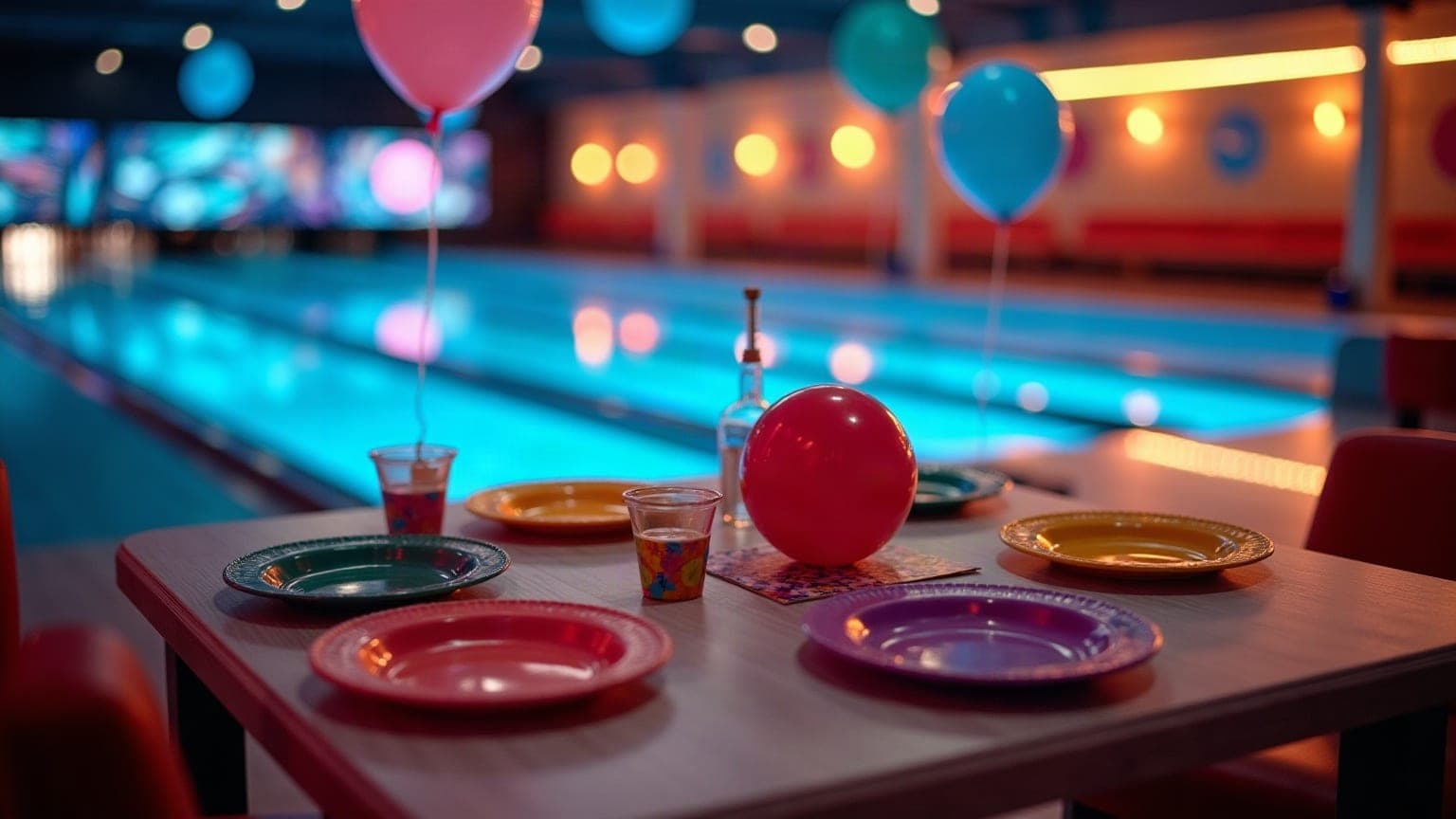
Pickle N Pins runs a full bar and kitchen on site, with a menu that covers appetizers, salads, tacos, sliders, wings and pizza, so there is no need to arrange outside catering or leave the building to feed the group. Because food service is not tied to a separate restaurant schedule, it can be planned for whatever point in the party actually works, right after the anchor activity wraps up, for instance, rather than at a fixed time set by the venue. TVs around the bar give anyone who steps away from the activities something to watch while they wait for the rest of the group to finish eating.
What is actually available to book
Six ticketed activities sit under one roof here, alongside the free games and the arcade, which is what makes a mixed party workable in the first place. The activities overview is worth a look before you commit to an anchor, since seeing all six side by side makes the tradeoffs clearer than reading about them one at a time.
Pickleball and padel, booked by the court
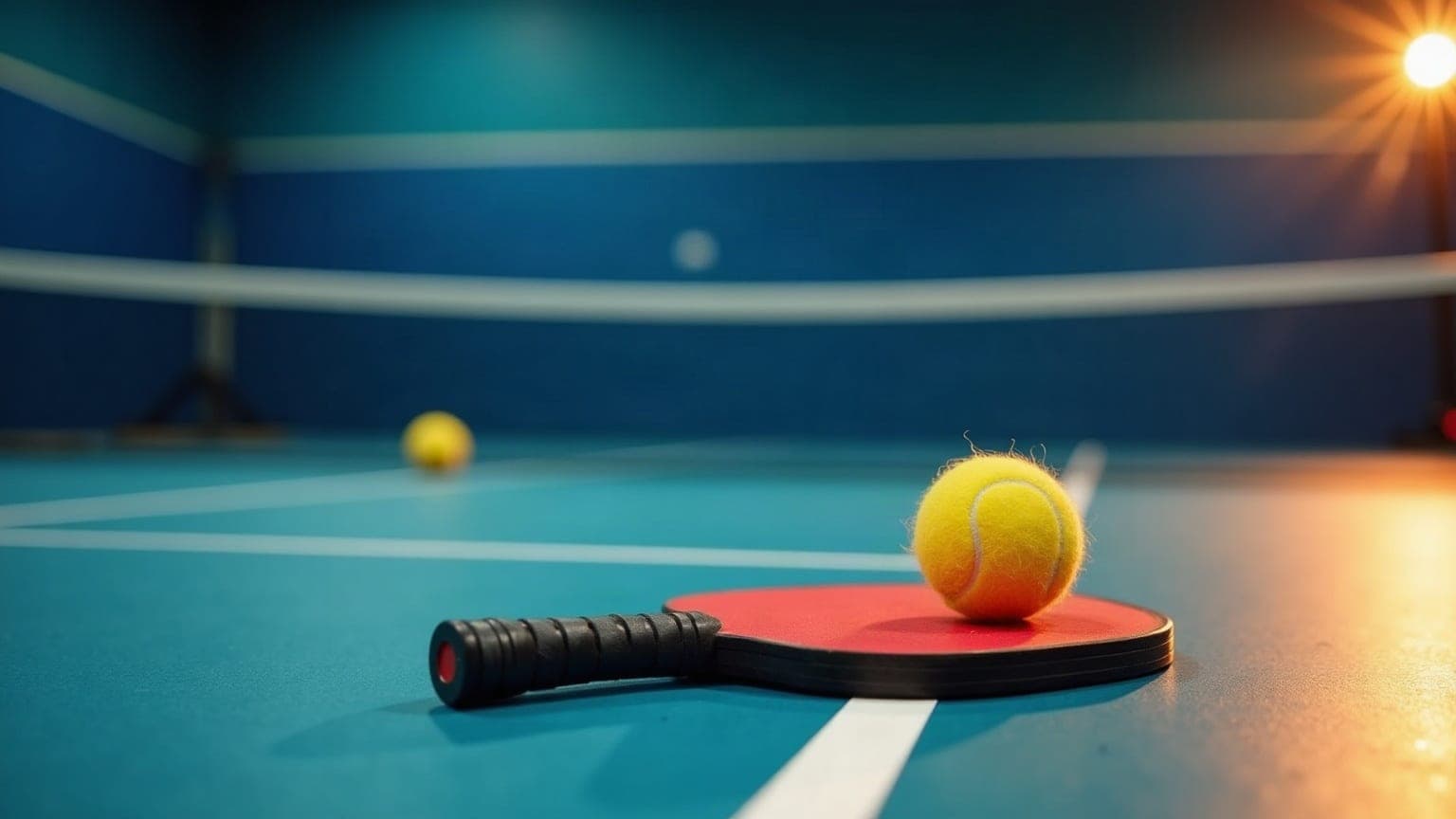
Pickleball is played with a solid paddle and a plastic ball on a small court, and it is simple enough that most first-timers are rallying within a game or two; our pickleball for beginners guide covers the basics if anyone in the group has never played. Padel is played inside a walled and meshed court and rewards positioning over power, which our padel vs pickleball comparison covers in more detail. Both are priced per court per hour, so a full court of four splits one rate.
Duckpin bowling, axe throwing, Krazy Darts and shuffleboard, booked by the person
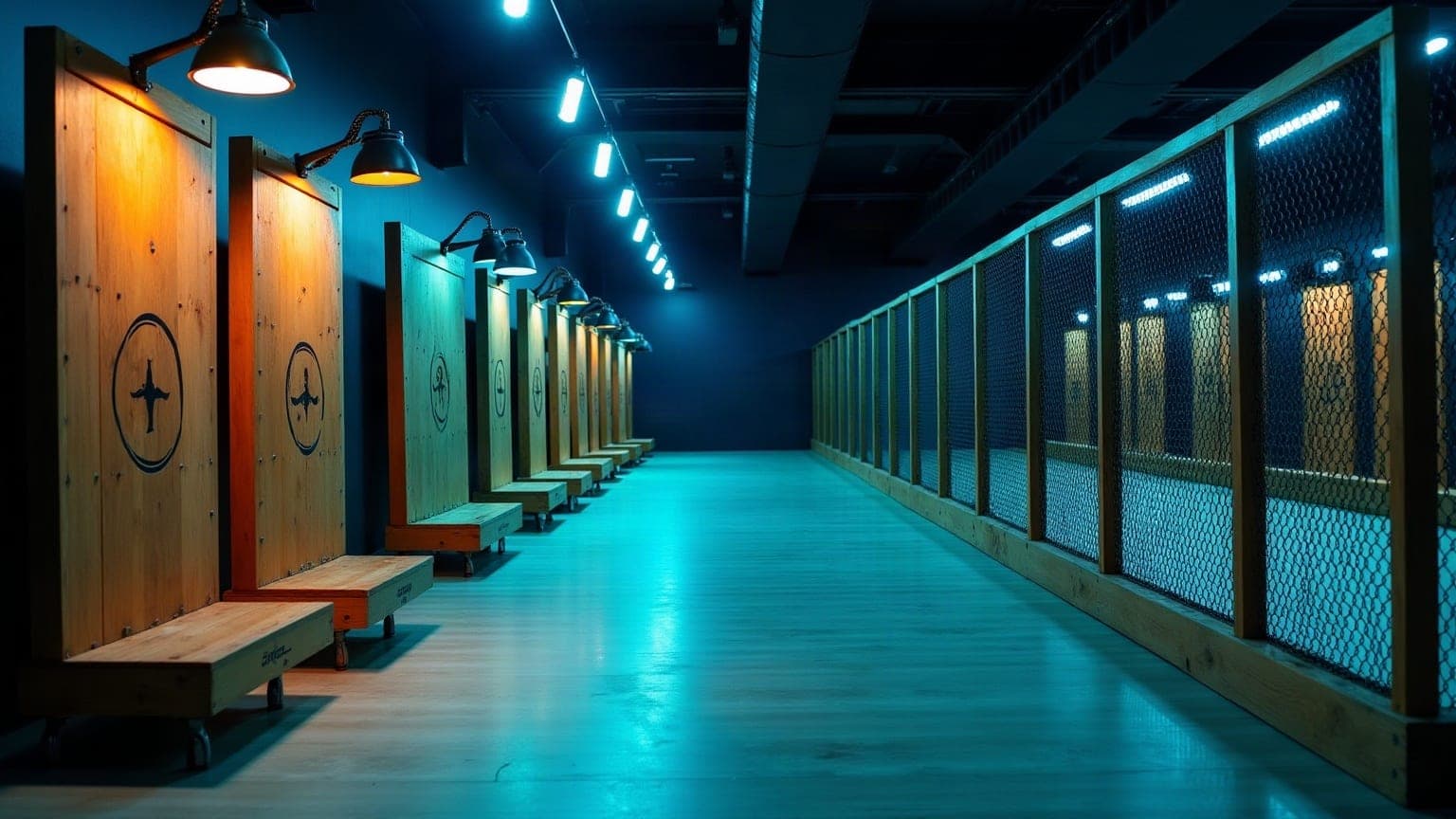
Duckpin bowling uses a smaller ball and shorter pins than standard ten-pin bowling, with three rolls per frame instead of two, and our guide to what is duckpin bowling walks through how a frame plays out. Axe throwing is a supervised lane where staff cover the safety basics before the first throw; see axe throwing for beginners for what that actually looks like. Krazy Darts tracks scores automatically on an electronic board, and shuffleboard rewards a light touch over strength. Three of them — duckpin bowling, axe throwing and Krazy Darts — are priced per person per hour rather than per court. Shuffleboard is the exception, charged per hour for the table.
Budgeting per head without a number in hand
Without quoting a figure, here is how the math actually works: for pickleball or padel, take the hourly court rate and divide it by however many people are playing on that court, so a fuller court lowers the per-person cost. For duckpin bowling, axe throwing and Krazy Darts, each guest is billed individually per hour, so the per-head cost stays roughly flat regardless of how many people join, and it scales directly with how long the activity runs. Shuffleboard is charged per hour for the table rather than per player.
Food and drinks add a separate line that depends entirely on what the group orders, so it is worth asking guests about dietary needs before the day rather than after the menu arrives at the table. The most reliable way to build an actual budget is to settle the headcount and the anchor activity first, check current rates on pricing, and reach out through special events for anything larger than a casual walk-in booking, since that page covers planning support beyond a standard reservation and carries the venue's own enquiry form.
What goes wrong at group events, and how to avoid it
The same handful of mistakes show up at group events almost anywhere, and most of them are avoidable with a little lead time. A final headcount that keeps changing up to the day of the party makes it hard to book the right amount of court or lane time, so it helps to ask guests to confirm by a firm date, even an informal one, rather than leaving numbers open until people show up. A party with no announced start and end time tends to run long on one end and feel rushed on the other, so telling guests both times up front, not just an arrival time, keeps the day on track.
Assuming the whole group wants the same activity is another common failure, especially once a guest list crosses more than a handful of people or spans more than one generation; building in a second activity or leaving free time for the backyard games and arcade avoids stranding anyone who does not want to do the main event. Booking too close to the date is the last one, particularly for an evening or weekend slot when the building is at its busiest: reserving a court or lane, or reaching out about a larger group, a week or two ahead gives real flexibility on timing that a last-minute call usually cannot.
The bottom line
A birthday party works well at Pickle N Pins when the guest list has a mix of ages or interests, because six ticketed activities, free backyard games, an arcade and a full kitchen under one roof mean nobody has to sit out the whole event. Pick one or two anchor activities, book them ahead of the date, block real time for food, and let the free games handle whoever needs a break from the main activity.
It is a weaker fit if the entire group already plays one sport competitively and wants a serious, single-focus session rather than a mixed party; a dedicated single-sport club built around that one activity will usually serve that narrower goal better than a venue built for variety. For everyone else, the planning here is mostly about sequencing and headcount, not about finding the one activity that will make the whole party work, and special events is the right place to start once the shape of the day is settled.