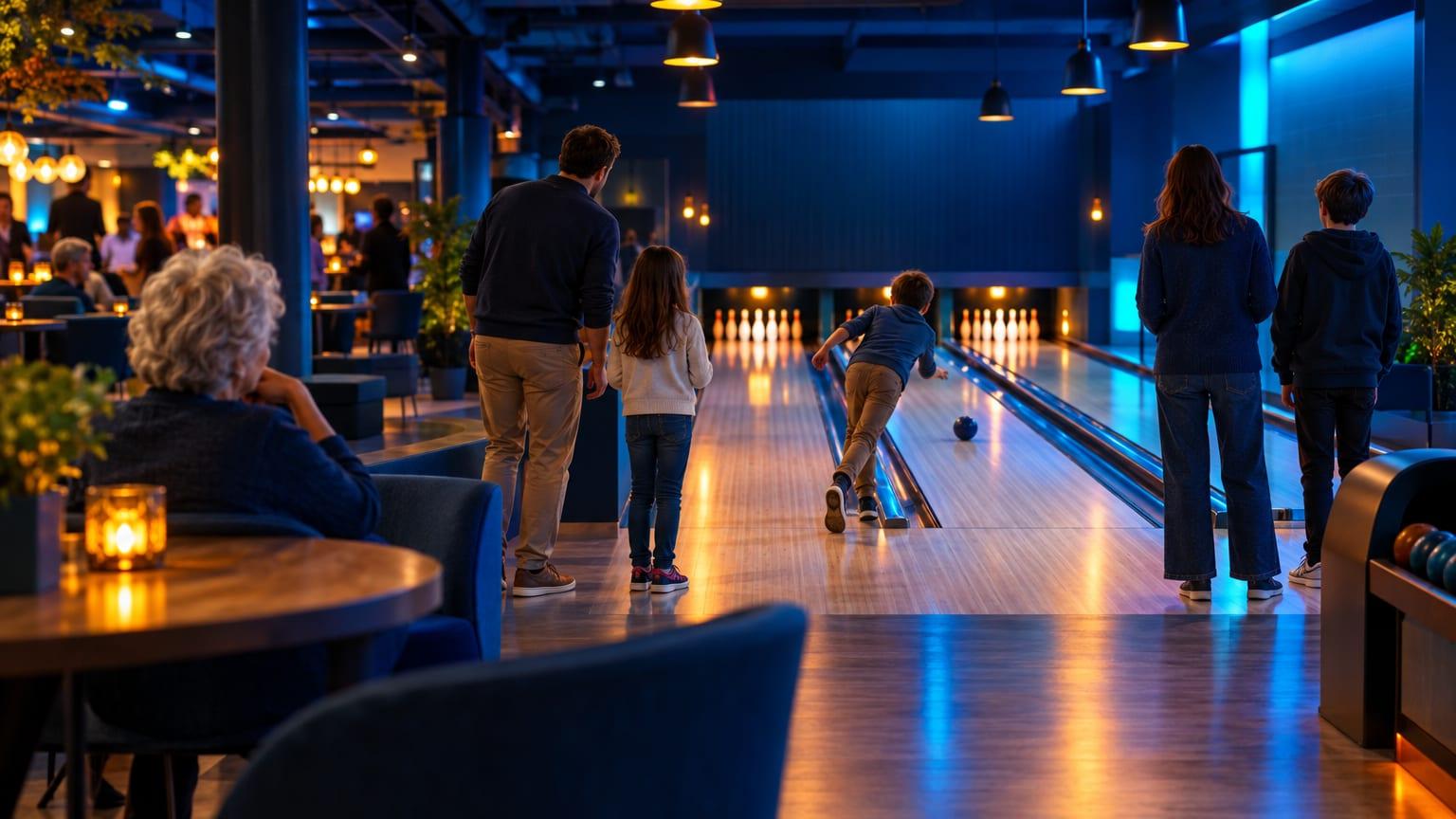

The winter school break is one of the longest stretches of unstructured time a family gets all year, and it arrives at the point when everyone has spent the last few weeks busy, tired and a little over-scheduled. Parents often find that the first couple of days feel like a holiday and the rest feel like a question: what are we doing today? This guide is a planning framework for keeping kids busy around New Orleans and Metairie over the break, mixing indoor and outdoor ideas, covering how to pace the days, and explaining how to avoid the two classic traps of break planning, which are over-booking the first week and running out of ideas by the second.
School calendars differ between Jefferson Parish, Orleans Parish, parochial and private schools, so break dates vary from family to family. Check your own school's calendar, then use the ideas below to fill whatever number of days you have.
Start with the shape of the break, not a list of activities
The most useful thing a family can do before the break starts is decide on a rhythm. A rough pattern that works for many households is one bigger outing, one smaller outing and one stay-home day in any given three-day stretch. Kids who are asked to be "on" every day get cranky by day four; kids who have nothing planned get restless by day two. A rhythm solves both problems because every day has an expected shape even when the details are loose.
It also helps to separate three kinds of days:
- Anchor days. A planned outing with a start time, such as a trip to a museum, a park, a zoo or a game venue. These are the days the kids talk about afterwards.
- Loose days. A couple of hours out of the house, a friend over, a bike ride, a walk to a nearby park. These need very little planning.
- Recovery days. Pajamas, a movie, baking, a board game, a long read. These are not a failure of planning. They are what stops the break from turning into a marathon.
Writing the break on a single calendar page, with only the anchor days filled in, takes ten minutes and prevents the "what do we do now?" conversation at nine in the morning. Let older kids pick one anchor day each. It gives them ownership and cuts down on complaints about the choice.
Weather in New Orleans in winter: plan for two outcomes
South Louisiana winters are mild compared with most of the country, but they are not predictable. A week can include a bright, comfortable afternoon that begs for a park and then a damp, grey, chilly day that makes the same park miserable. Rain is common enough that every outdoor plan should have an indoor sibling ready to go, and the reverse is also true: a nice day is a waste to spend entirely indoors.
The practical way to handle this is to choose activities in pairs. Pair a park morning with an indoor afternoon, or an indoor anchor day with a short walk afterwards. If the forecast turns on you, you swap rather than cancel. Our guides to rainy day activities in New Orleans and indoor activities for kids in New Orleans are worth bookmarking before the break so the backup plan already exists.
Dress in layers. A morning that starts cool can warm up quickly, and children who are too hot or too cold will tell you in the first fifteen minutes. A light jacket that can be tied around a waist is the most reliable piece of winter-break clothing in the region.
Outdoor ideas around New Orleans and Jefferson Parish
When the weather cooperates, this part of Louisiana has plenty of outdoor options that suit kids of nearly every age. The list below is deliberately general. Hours, closures and special programming change, especially around the holidays, so check each place's own website before you leave.
- City Park in New Orleans. One of the largest urban parks in the country, with trails, open lawns, oak trees, a botanical garden and an amusement area aimed at younger children. It is the kind of place where a family can spend a morning without a fixed agenda. See the park's own site at nolacitypark.com for current offerings.
- Audubon Park and the Audubon Zoo. The park has a walking and jogging loop, open green space and a view of the Mississippi; the zoo and aquarium are well known to local families. The organization's site at audubonnature.org lists current hours.
- Lafreniere Park in Metairie. A neighborhood-scale park in Jefferson Parish with walking paths and open space, a convenient option when you want fresh air without a long drive.
- Bikes and scooters on the levee path or in a neighborhood park. Free, flexible, and a good way to burn off a morning's energy.
- A streetcar ride. Easy to underrate. Many kids, especially younger ones, treat a ride on the St. Charles line as an outing in itself.
A pattern that works well: do the outdoor activity in the morning, when the air is coolest and the kids have the most energy, then move indoors for lunch and the afternoon. That sequence also puts the hardest part of the day, the mid-afternoon slump, in a comfortable place with food nearby.
Indoor ideas that do not feel like a fallback
Indoor does not have to mean screens. The key is to have a handful of places that are a real destination, not simply the thing you do when it rains.
Museums and cultural spots. New Orleans has a number of museums and children's attractions, and winter is a comfortable time to visit them because the lines tend to be more manageable than in peak tourist seasons. Check each venue's calendar for hours and any holiday schedule.
Libraries. A branch library is an underrated winter-break resource: free, quiet when you need quiet, and often running programs for children. Library cards are also a cheap way to stock up on books for the recovery days.
Home projects. Baking, a science kitchen experiment, a blanket fort, building a cardboard city. These cost little and they work especially well on the grey days.
An active entertainment venue. This is where a place like Pickle N Pins in Metairie fits into a break plan. Everything at the venue is indoors, so the forecast does not matter, and it covers a wide age range in one stop. The venue has six ticketed activities (pickleball, padel, duckpin bowling, axe throwing, Krazy Darts and shuffleboard), an arcade and a set of free backyard games: cornhole, washers, table tennis, foosball and Connect 4. There is a full bar and a kitchen, so lunch or an early dinner does not require leaving. See the activities page for an overview.
Matching activities to ages
Break planning goes wrong when a plan fits one child and bores another. If your kids span a few years, the goal is an outing with something for each of them, not an outing that is perfect for one. Here is how the activities at an entertainment venue tend to sort out.
Younger kids
Very young children do best with activities that need no skill and no waiting. The free backyard games are the most forgiving choice, since cornhole, washers, table tennis, foosball and Connect 4 can be learned in a minute. Duckpin bowling is another good one: the ball is smaller than a standard bowling ball and the pins are shorter, so it is more manageable for small hands. Our guide to what duckpin bowling is explains how it differs from the ten-pin version many parents grew up with.
Keep visits short for this age group. Forty-five minutes of full engagement is better than two hours of fading attention.
School-age kids
Shuffleboard and Krazy Darts are both comfortable fits. The venue's own pages suggest ages 8 and up for shuffleboard and darts, or younger with supervision, and shuffleboard rewards a smooth touch more than strength, which lets a ten-year-old compete with an adult. If you want to learn the basics of the game before you go, our shuffleboard rules for beginners and darts rules for beginners guides are short reads. The arcade is a natural reward for the end of a visit.
Tweens and teens
Older kids tend to want something that feels like an actual game rather than an activity for children. Pickleball and padel are both doubles-friendly and easy to start, and they are a good way to get a teenager away from a screen for an hour. Axe throwing requires age 12 and older and closed-toe shoes, which makes it a real option for a tween or a teenager. Our axe throwing for beginners guide covers what a first session looks like.
For anything beyond the general guidance above, the venue's activity pages are the authority on age suggestions, and the reservation and cancellation terms page is worth a read before you book.
Keeping a group of cousins, friends and neighbors busy
Winter break is also the season of extra children: visiting cousins, a neighbor's kids, a friend staying over. A larger group changes the planning in a few ways.
First, choose activities that scale. Duckpin bowling and shuffleboard both work with a mix of players, and the free yard games allow children to rotate in and out without a booking. Second, think about who is waiting. In any turn-based game, the child who is waiting is the child most likely to wander, so pair an active game with a passive one, such as bowling alongside foosball or the arcade. Third, reserve ahead. Holiday weeks are busier than regular weeks, and the booking page lets you plan before you arrive. Members can reserve up to 14 days ahead, which is useful for families who know their break schedule early.
If an outing is a family gathering rather than a kids' day, the same logic holds. A venue with food and drinks on site means adults can sit down while kids play, and a variety of activities gives each age group its own thing to do. Our guide to family fun in Metairie and New Orleans compares the broader options, and the guide to family entertainment centers in Jefferson Parish covers other places in the area.
A sample week you can adapt
This is a template, not a prescription. Swap in your own school's days and your own preferences.
- Day one: recovery. Sleep in, stay home, let the kids decompress. Resist the urge to fill it.
- Day two: outdoor anchor. A park morning, a picnic lunch if the weather allows, a quiet afternoon.
- Day three: loose. A library visit and a friend over.
- Day four: indoor anchor. A museum, or an active game outing. Book ahead if you are going to a venue.
- Day five: baking and a movie. Cheap, cozy, and it makes use of the grey day.
- Day six: neighborhood adventure. A streetcar ride, a bike ride, a walk to a favorite snack stop.
- Day seven: family game day. A game venue with something for everyone, or board games at home.
Notice what the plan avoids: it never puts two anchor days back to back, and it leaves the day before the end of break light, so the return to school does not arrive at the end of a sprint.
Small habits that make the break easier
A few habits help regardless of the activities you choose.
- Let kids help plan. A child who picked the outing complains less about it.
- Pack a small bag. Water, a snack, a light jacket, a charger. It handles most small emergencies.
- Build in a snack plan. Hungry kids make poor decisions. A venue with a kitchen, such as the one described on the menu page, removes the problem of finding food mid-outing.
- End on a high. Leave a little before the kids are tired of the activity rather than after. They remember the fun and ask to go back.
- Track what worked. A quick note on the fridge about which outings were hits makes the next break easier.
- Check the details before you go. Hours, reservations and any seasonal changes belong on your pre-outing checklist. For the venue's current hours and any holiday schedule, see its announcements and the contact section on the home page, and look at the pricing page for current rates, since they can change.
The bottom line
A good winter break is built from rhythm rather than from a packed itinerary: a few anchor days, some loose days and some recovery days, with every outdoor plan paired with an indoor backup. Around New Orleans and Metairie that means parks and zoos when the weather is kind, museums and libraries when it is not, and an indoor game venue when you want something active for a mixed group of ages. Pickle N Pins in Metairie is one such option, with six ticketed activities, an arcade, free backyard games, a full bar and a kitchen under one roof. Pick two or three anchor days, book ahead where booking is possible, and let the rest of the break take care of itself.