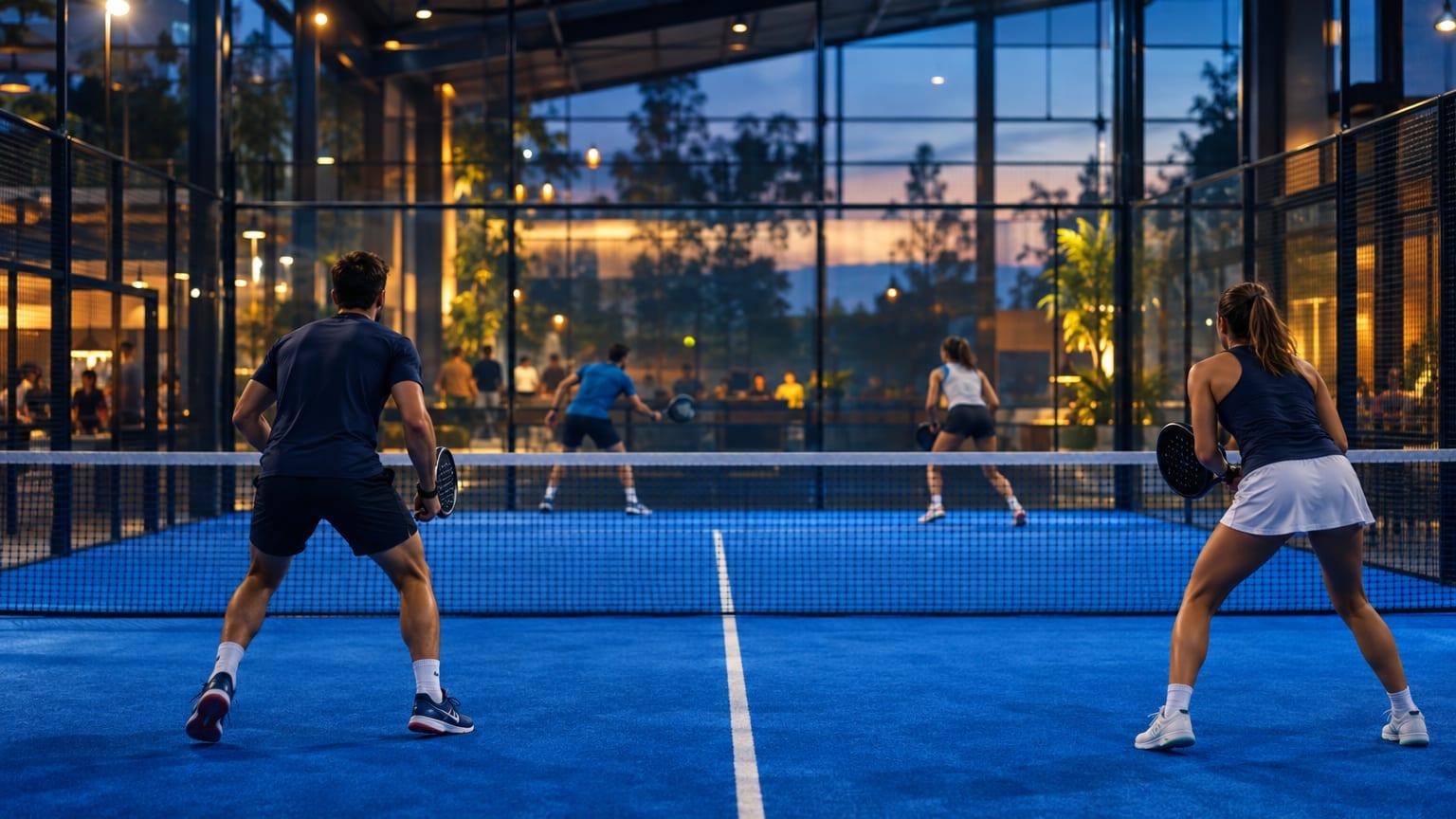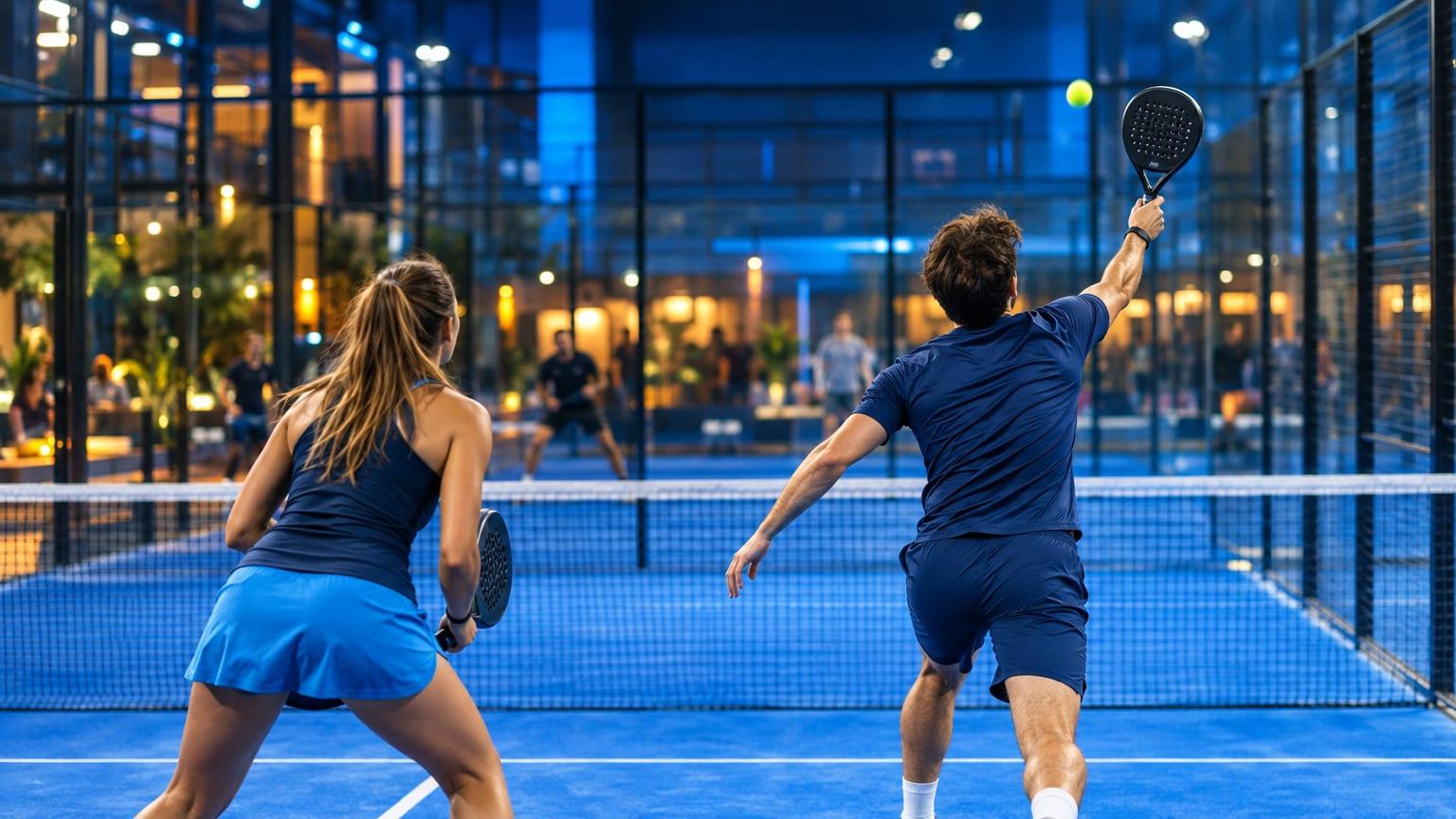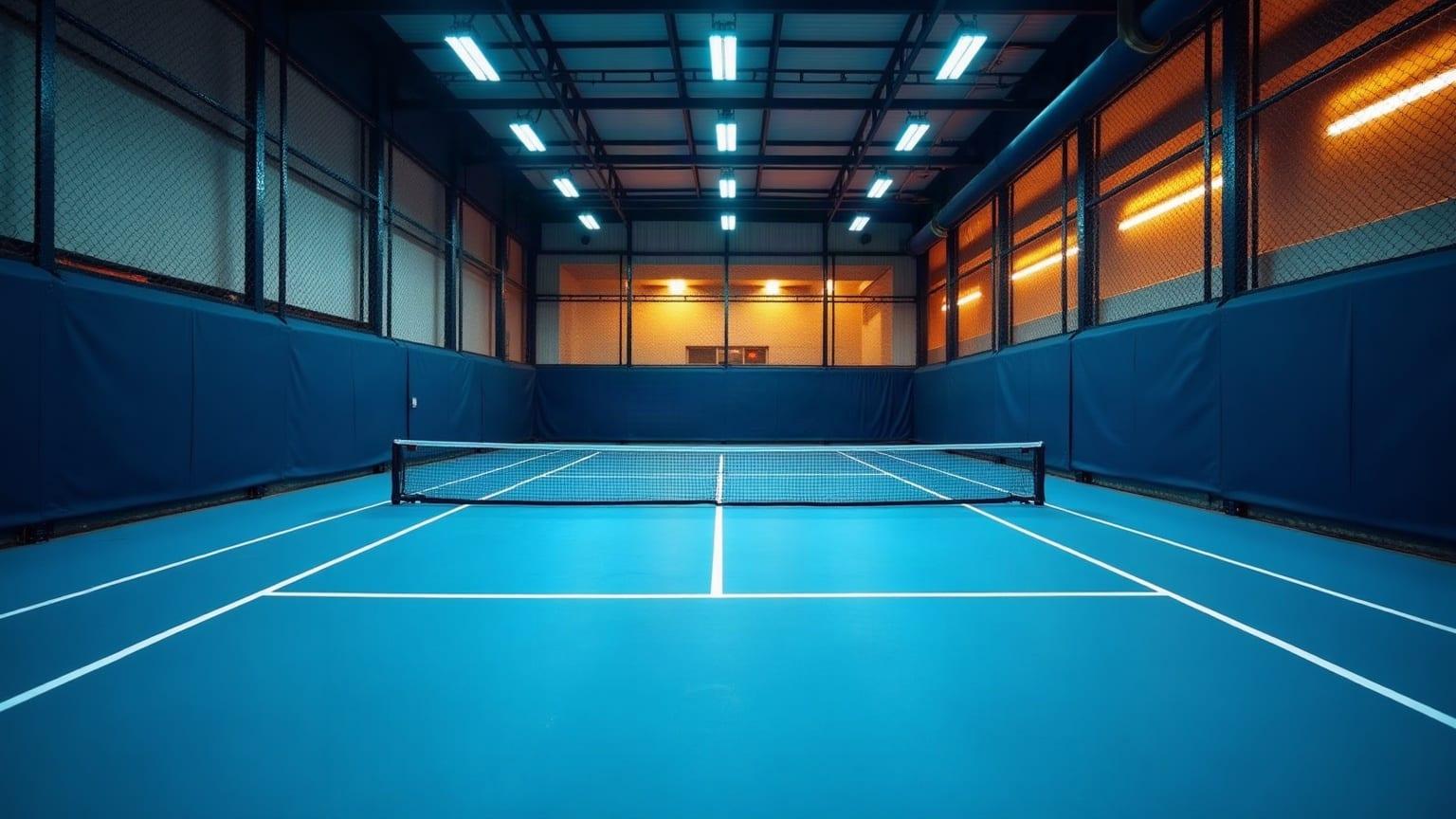
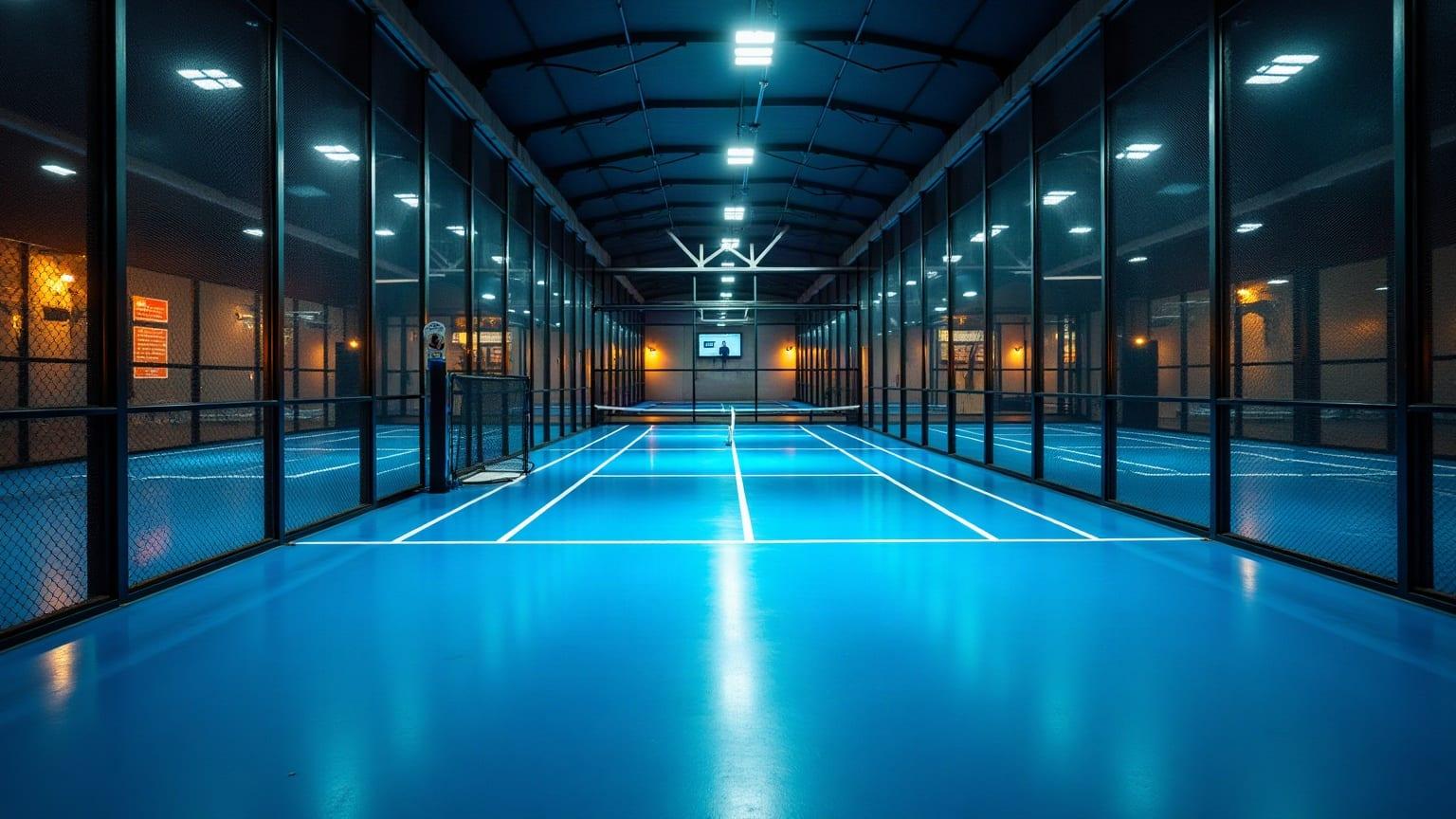
A padel point looks familiar to anyone who has watched tennis, right up until the ball bounces off the glass and keeps going. What Is Padel? covers the sport's history, the court and the equipment; this guide skips all of that and goes straight to the part most first-timers actually want explained before they step on court: how a serve starts a point, what keeps a rally alive, what ends it, and how the numbers on the scoreboard actually move. None of this is specific to any one venue — it's how the sport is played anywhere padel is played, from a club in Madrid to an indoor court in Metairie.
How a point starts: the serve
Every padel point begins with an underarm serve, and that single restriction shapes the whole opening of the point. The server bounces the ball once inside their own service box, then strikes it below waist height so it travels diagonally into the service box on the opposite side of the court — there is no overhead serve in padel, ever, at any level. The server needs at least one foot on the ground behind the service line at the moment of contact; stepping on or over that line while serving is a foot fault, and it's treated the same as any other service fault.
As in tennis, a server gets two attempts on each point. A fault on the first serve doesn't cost the point outright, only the chance to serve again; missing the second serve too — a double fault — hands the point straight to the receiving team. That forgiveness matters more in padel than it might sound, because the underarm motion and the low contact point leave less margin than an overhead tennis serve does, and a server who nets a first attempt still has a real second chance to start the point cleanly.
Serving position rotates in a fixed pattern. One player serves for an entire game — all the points in it — and the two players on a team alternate which of them serves from game to game across a set. Within a single game, the server switches sides after each point, serving from the right side of the court on even scores and the left on odd ones, exactly the way a tennis server does. The team receiving serve picks which of its two players returns from which side at the start of a set, and that arrangement generally holds for the whole set once it's set.
When a serve is a fault, and when it's a let
Not every imperfect serve is a fault. If a serve clips the top of the net cord and still lands correctly inside the proper service box, it's called a let: the point doesn't count against either server, and the same serve is simply replayed. That's identical to how tennis handles a let serve, and it exists for the same reason — a serve that would otherwise have been perfectly good shouldn't be penalized for a bounce off the net cord that neither player controls.
A serve is a fault, rather than a let, in a handful of specific situations: landing outside the correct diagonal service box, hitting the net and failing to clear it into the correct box at all, being struck from above waist height, or being hit without the ball having bounced first inside the server's own box. Two faults in a row on the same point is a double fault, and the point goes to the receiving team without a rally ever developing. None of this differs meaningfully from how a fault works in tennis — padel borrowed the concept wholesale, which is part of why the serve is usually the fastest part of the sport for a tennis player to pick up.
Keeping the ball alive: how the walls factor into a point
Once the serve is in play, padel stops resembling tennis and starts resembling squash. A ball that has bounced once on the court's own playing surface is still live even after it carries on to hit the back or side wall — the glass at the back of each half, or the lower glass and upper mesh along the sides — and a player can let it come off that wall before playing a return shot. That single rule is what makes padel rallies run longer than tennis rallies of similar skill level: a shot that would be a clean winner on an open court, sailing past a player's reach, is often still recoverable off the glass a beat later.
The wall only extends a point under specific conditions, though. The ball has to bounce on the ground within the court before or after touching a wall — it can't be volleyed directly off a wall without ever touching the ground, and it can't bounce twice on the ground before a player gets to it. A ball that clears the entire enclosure on the fly, going out over the top of the walls rather than staying inside the court, is out regardless of whether it had already bounced. Inside those boundaries, though, the wall is simply part of the court, the same way a squash player treats a side wall as another surface to play off rather than an obstacle to avoid.
That single rule is also why two shots dominate padel strategy in a way neither does in tennis. A lob, hit high and deep toward the opponents' own back glass, buys time to recover court position and often forces a defensive reply straight off the wall, since the receiving team has to judge the bounce and the glass together rather than just the bounce alone. A smash on a ball coming back off the glass is the natural answer to a lob that lands short, and a lot of a point's actual outcome comes down to which team controls when the ball goes to the wall and when it stays low and flat instead — not simply which team hits harder.
What actually ends a point
A handful of outcomes end a padel point, and once a player has the serve and the wall rules straight, this part is mostly common sense carried over from any net sport. A point ends when the ball bounces twice on the ground on one side before that team returns it, when a shot fails to clear the net into the opponents' half at all, when the ball lands outside the court's boundaries even after a legal wall touch, or when a player touches the net or crosses into the opponents' half of the court during play. It also ends, less commonly, if a player's shot strikes their own partner or if the ball becomes tangled in a piece of court equipment mid-rally — both rare, but both a dead point rather than a continuing one.
None of these rules are unique to padel; they're close cousins of how a point ends in tennis, with the wall-touch allowance layered on top as the sport's one genuinely distinct addition. A player who already understands "the ball has to land in and can only bounce once" from tennis or pickleball has already learned most of what decides a padel point — the wall is the only real new idea to absorb.
Scoring a game: from love to game point
Individual points inside a game follow tennis's numbering exactly: love, 15, 30, 40, and game. A team has to win by two clear points once the score reaches 40-40, a situation called deuce, the same as in tennis — win the next point after deuce and a team reaches "advantage," and winning the point after that closes out the game, while losing it sends the score back to deuce.
Recreational padel very commonly swaps that deuce-and-advantage sequence for a golden point instead, and it's worth knowing before a first game rather than discovering it mid-match: at deuce, the next point simply decides the game outright, with no requirement to win by two. Some competitive formats use golden point as well, mainly to keep match length predictable, but plenty of tournament play still uses full advantage scoring. Since the choice changes how long a close game can run, it's a good thing to confirm with a playing partner or venue staff before starting, rather than assuming either rule is the default everywhere.
Sets, tiebreaks and winning a match
Games stack into sets the same way points stack into games. The first team to reach six games wins the set, again by a margin of two — six games to four closes it out, but six games to five does not, and play continues. If a set reaches six games apiece, a tiebreak decides it: players count up from zero rather than using the 15-30-40 sequence, and the first side to reach seven points, again winning by two, takes the set.
A full match is normally the best of three sets, so a team needs to win two sets to win the match. At the recreational level, a shortened "match tiebreak" — sometimes called a super tiebreak, typically played to ten points — often replaces a full third set when the first two sets split, which keeps a night of casual play from running long. Whether a specific match uses a full third set or a super tiebreak is, like the golden point rule, worth a quick confirmation before play starts rather than an assumption.
The International Padel Federation's official rules cover every edge case beyond what a recreational guide needs — line-call procedure, equipment specifications, the exact wording of a let — for anyone who wants the sport's full rulebook rather than the version that gets a beginner through their first few games.
Padel scoring at Pickle N Pins
The rules above apply on any padel court, including the indoor courts at Pickle N Pins in Metairie — nothing about scoring changes because the court happens to be indoors, and being fully enclosed means neither a rainy afternoon nor a hot Louisiana one affects whether a match happens as scheduled. Pickle N Pins says it was the first venue in Metairie to add padel courts, and rackets are available to rent on site for anyone who doesn't own one yet, so showing up without gear isn't a barrier to trying a first game. Padel at the venue can be reserved through booking, and current court rates are on the pricing page rather than repeated here, since they're the kind of detail that changes independently of how the sport itself is scored.
A first-timer who has only ever kept score in tennis will find every number on a padel scoreboard means exactly what it already means; the only genuinely new habit is watching the wall instead of assuming the point is over once the ball gets past a racket.
Anyone still deciding whether padel or pickleball is the better sport to start with, rather than how padel specifically is scored, may want the padel vs pickleball comparison instead — this guide assumed padel was already the answer and went straight to the mechanics of a point.
The short version
A padel point starts with an underarm serve hit diagonally, allows two attempts before a double fault costs the point, and stays alive off the back and side walls as long as the ball bounces on the ground once and doesn't bounce twice before it's returned. Scoring climbs from love to 15 to 30 to 40 to game exactly like tennis, with deuce-and-advantage or a golden-point sudden-death deciding close games depending on the format being played, and a match is normally the best of three sets with a tiebreak settling any set that reaches six games apiece.
None of that takes long to internalize once it's actually watched in motion — most players find the serve and the point-scoring ladder are already second nature from tennis, and the wall rule is the only genuinely new habit to build, usually within the first few rallies of a first visit.