The direct answer, checked as of this writing: Pickle N Pins in Metairie appears to be the only confirmed, currently open, dedicated padel venue in the greater New Orleans area. A second facility in the Warehouse District has not opened yet, and a third venue's padel plans could not be confirmed on its own site at all. This guide covers what padel actually is, what a first session feels like, and exactly where things stand at every padel court anyone in this market has heard of.
This article is written by Pickle N Pins. Where it describes this venue, that is a direct account of what is on site. Where it names other venues, every claim below is checked against that venue's own website rather than a directory listing, and where a fact could not be confirmed that way, this guide says so plainly instead of guessing.
What padel is, and why it is spreading so fast
Padel is a racquet sport that started in Mexico in the late 1960s and grew into a mainstream sport across Spain, Argentina and Italy before spreading to the United States over the last several years. It is played only in doubles, on a court about a third the size of a tennis court, and the enclosing walls are part of the game rather than a boundary: a ball can bounce off them and stay in play, which is the single biggest reason it plays so differently from tennis.
That wall-based rally is also why padel has grown as fast as it has among adults who never played much tennis. A shorter court and a wall behind you both cut down on the running a tennis match demands, and the underhand serve removes the one shot that takes the longest to learn. A club-level tennis player and a total beginner can share a court and both hit real rallies, which is unusual for a racquet sport and a large part of why padel clubs keep filling up faster than they can add courts.
There is also a real estate reason padel keeps showing up in places tennis never could. A padel court fits inside roughly a third of the footprint a tennis court needs, so it can go into a converted warehouse bay or sit alongside several other indoor activities under one roof instead of needing its own dedicated lot. That is part of why a city can go from zero padel courts to a handful within a year or two without much warning.
The court and the walls
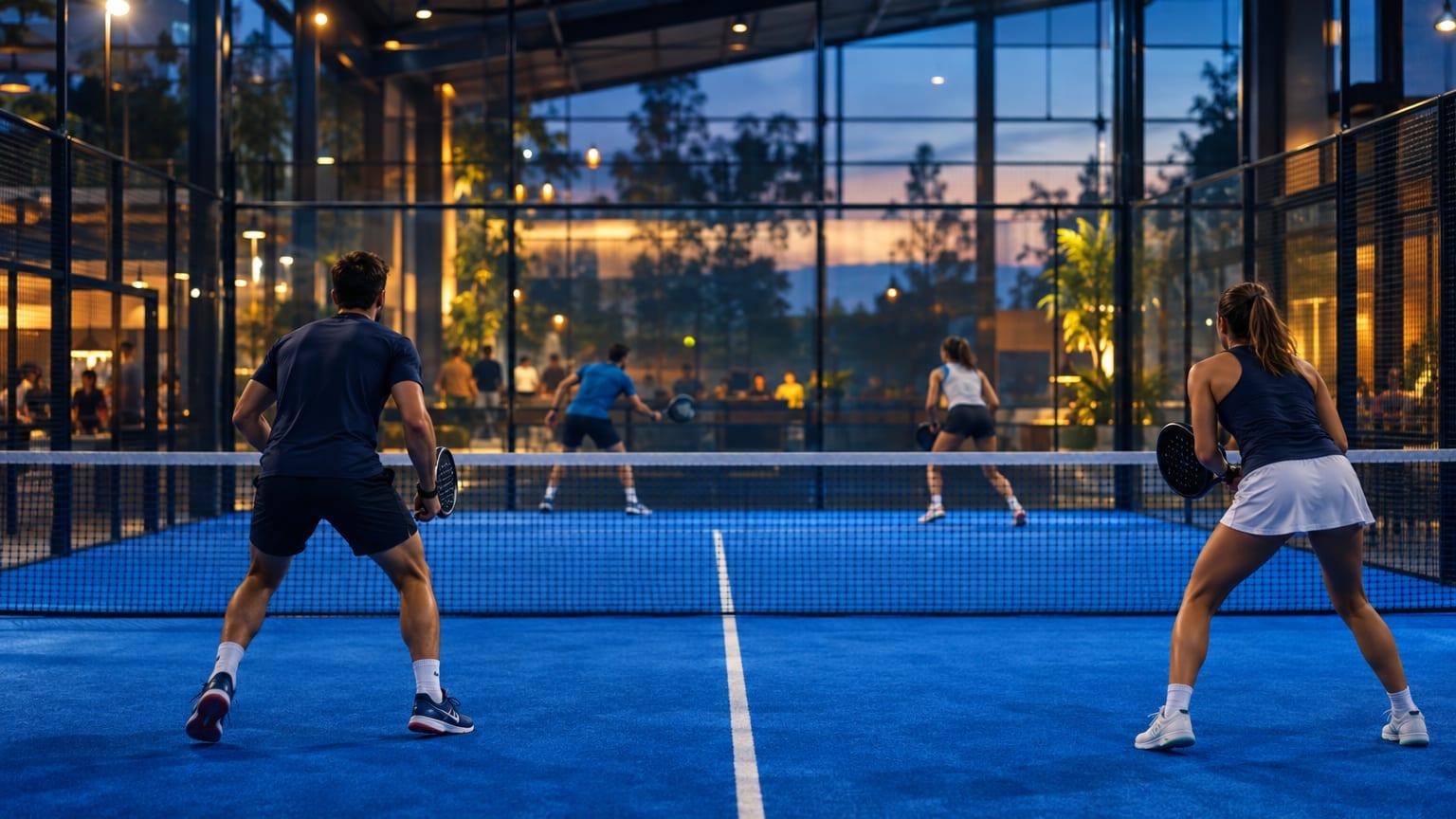
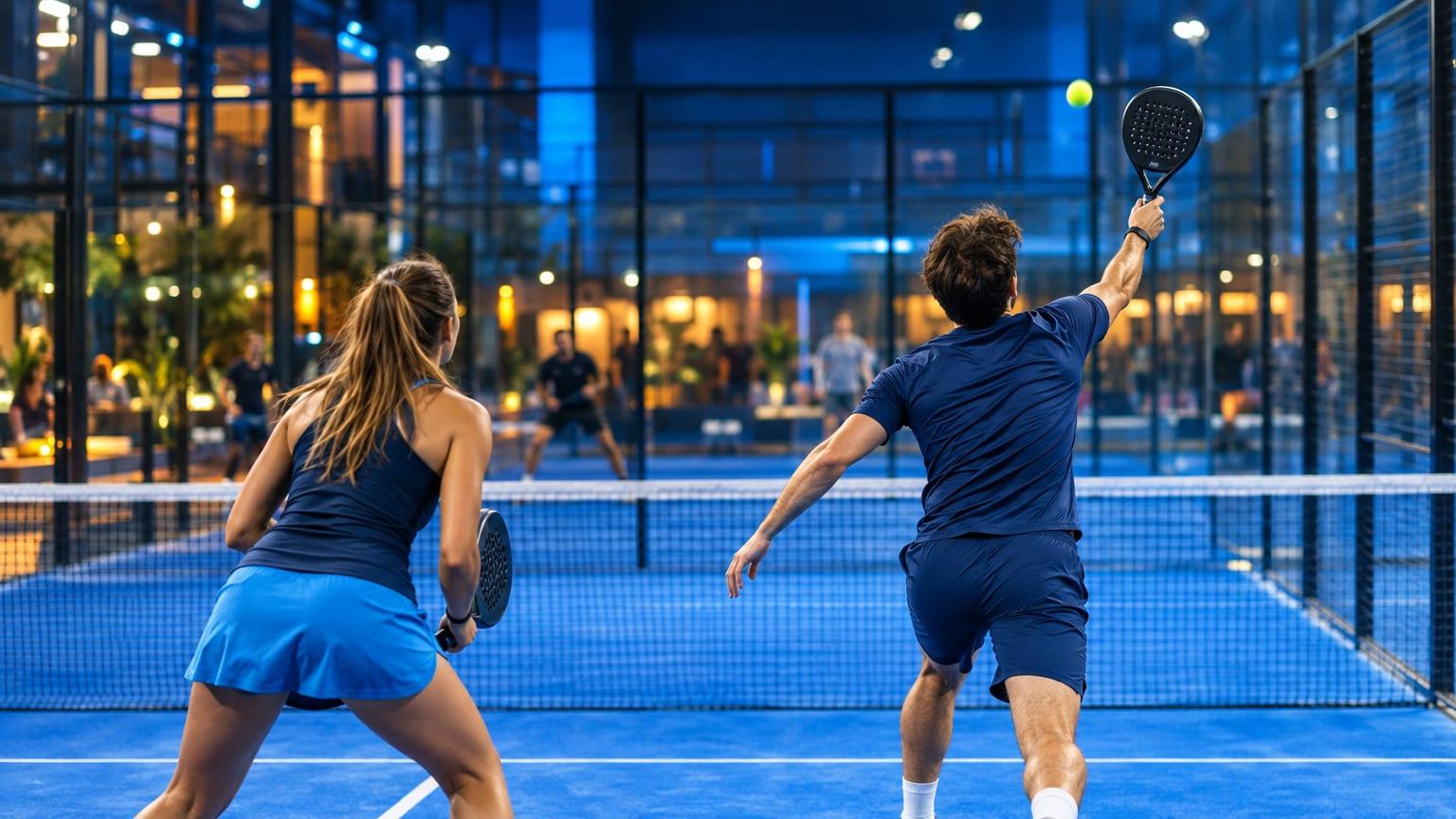
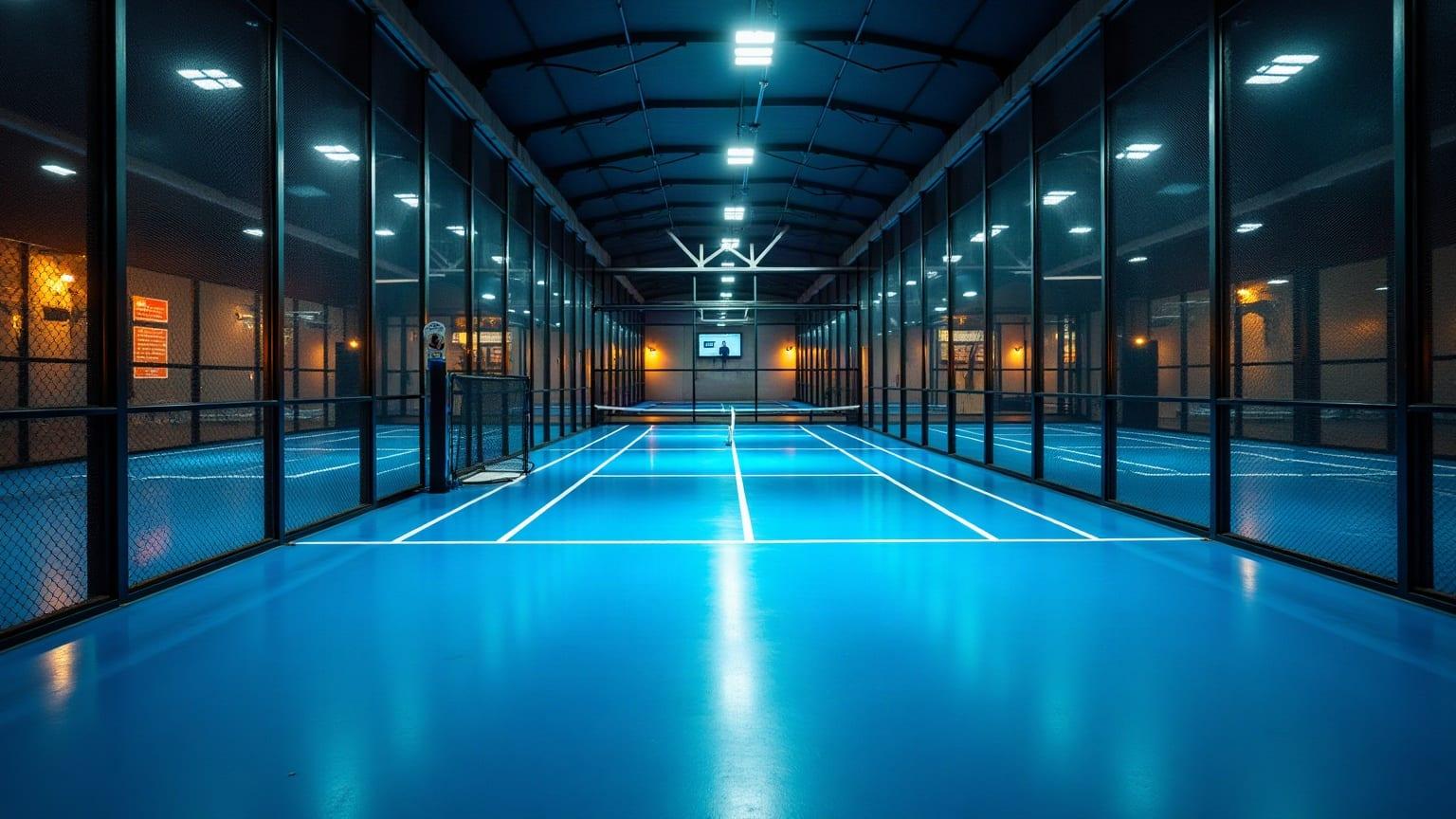
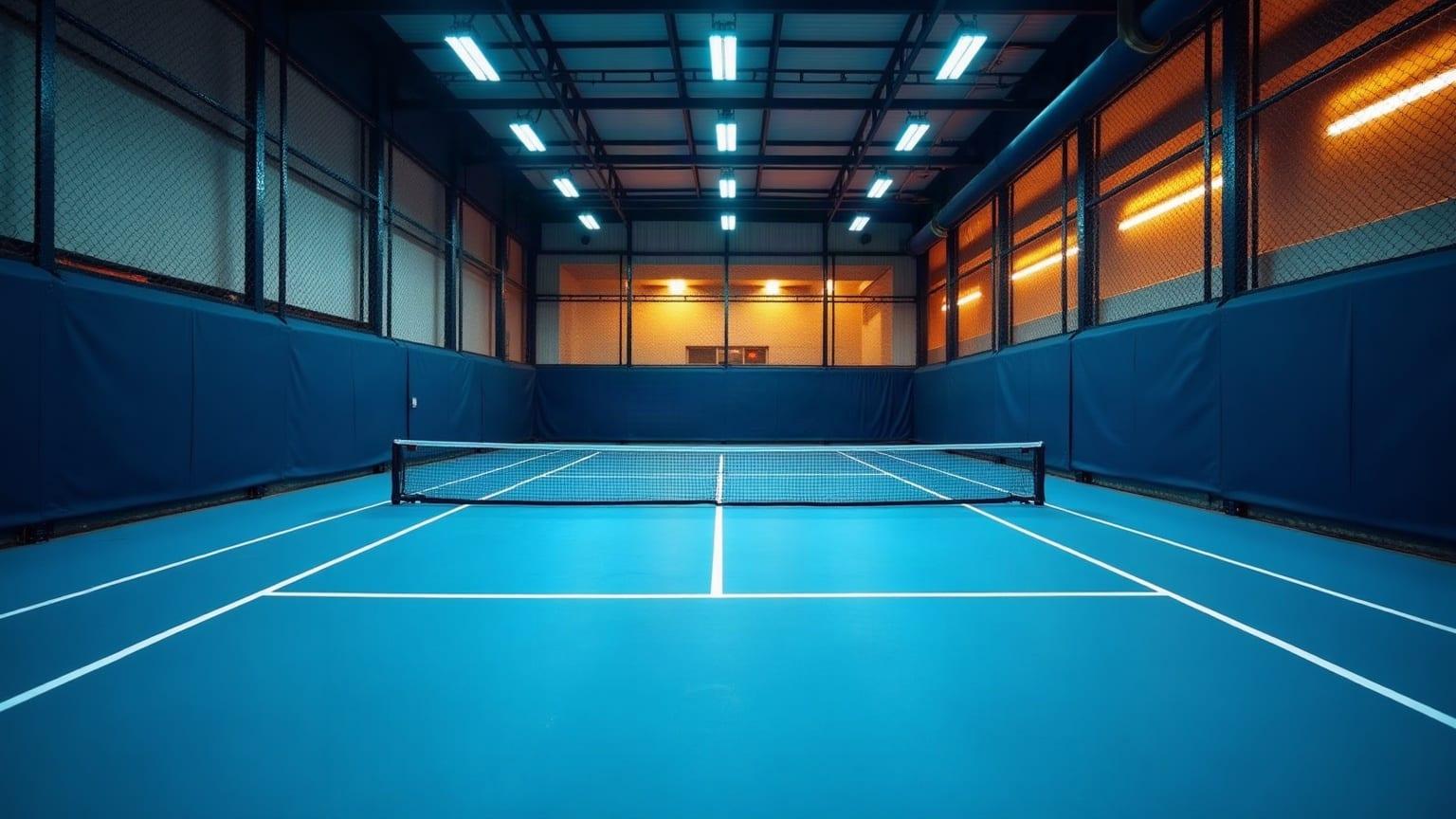
A padel court is enclosed on all sides by a mix of tempered glass and metal mesh, roughly 20 meters long and 10 meters wide, split by a net at the center the same height as a tennis net. Play is always doubles, two players per side, and the solid, stringless paddle has holes through its face instead of strings. Because the walls are legal to play off, a point does not end the moment a ball is out of reach the way it would on an open tennis court; a shot that would be a clean winner elsewhere can come back into play off the glass.
Scoring at a glance
Padel keeps tennis's scoring: love, 15, 30, 40 and game, with sets and a match typically decided by two out of three sets. The serve is underhand, hit below waist height off a bounce, and it rotates between the four players on court rather than staying with one side for a whole game the way some other racquet sports handle it. For the complete rules, including how a let and a fault are called and how doubles positioning works, see what is padel; for a side-by-side against the sport most people compare it to first, see padel vs pickleball.
What to expect on a first visit
Nobody walks onto a padel court already knowing how to use the walls, and that is normal. Most first-timers spend the opening few minutes simply learning to let a ball bounce off the back glass before trying to hit it, rather than swinging at it out of the air the way instinct suggests. Because the sport is doubles-only, a first-timer is never carrying a whole side alone, and a slightly mismatched group still produces playable rallies far more often than an equivalent mismatch would on an open tennis court.
What to bring and wear
Court shoes with a non-marking sole and good lateral grip matter more in padel than casual sneakers, since the game involves a lot of side-to-side movement in a confined space. Athletic clothing and water are the only other essentials. A paddle is not something a first-timer needs to own: courts built for walk-in play typically rent them on site, along with balls, so the only real preparation is showing up in the right shoes.
A typical session runs an hour, which is enough time for a full doubles match plus a few minutes to warm up and get used to how the ball comes off the glass. Because the court is enclosed, a padel session also tends to run cooler and more predictably than an outdoor tennis or pickleball session in Louisiana's summer heat, since there is no sun to plan around and no wind to change how a serve behaves.
Finding a padel court in a city that barely has any
Padel is still new enough in most American cities that a search for "padel near me" turns up a mix of real, bookable courts and pages for clubs that have not opened yet. The reliable way to tell the difference is to look for a live booking calendar rather than a contact form: a court that is actually open lets you pick a specific date and time and pay for it on the spot, on either the venue's own site or a national padel booking platform. A page that only collects an email address, or that says "opening soon" without a firm date, is not a place to plan an evening around yet, no matter how finished the website looks.
It is also worth checking a venue's own site directly rather than trusting a directory listing or a review aggregator, since those can lag behind a closure or an opening by months. A phone call or a direct message before driving somewhere is a reasonable extra step in a market with this few courts, especially for a venue whose site reads as still pre-launch.
A few other signals are worth watching for. A venue that names a specific number of courts, posts real hours and lists a rental fee for rackets and balls is almost always describing something that already exists, since nobody bothers publishing that level of operational detail for a facility that has not been built yet. A venue that only shows renderings, a countdown, or a single "opening soon" banner is still in the announcement phase, and treating that stage the same as an open court is the single most common mistake in a market this new.
Where to play padel near New Orleans right now
Pickle N Pins, Metairie
Pickle N Pins says it was the first venue in Metairie to add padel courts, and they are indoors alongside the building's five other ticketed activities: pickleball, duckpin bowling, axe throwing, Krazy Darts and shuffleboard. The venue is at 6930 Veterans Memorial Blvd #4419, Metairie, LA 70003, open Sunday through Thursday from 9AM to 10PM and Friday and Saturday from 9AM to 1AM. Courts can be booked online ahead of time, which matters most on weekend evenings, and the activities page and pricing page cover exactly what a session includes.
New Orleans Padel Club, Warehouse District
New Orleans Padel Club lists an address at 2375 Tchoupitoulas Street in the Warehouse District, but its own site currently reads as a pre-opening landing page, giving an "opening early July" date without stating a year. A separate booking platform that lists padel venues also marks it as coming soon rather than open for reservations. Treat this one as not yet confirmed open: it is not something to plan an evening around, and the honest move is to check directly with them before assuming a court is available.
New Orleans Racquet Club
Some third-party sources describe padel plans at New Orleans Racquet Club, but its own website could not be loaded during this research, so none of that could be confirmed against a primary source. Its padel status is genuinely unresolved rather than confirmed either way, and no court there should be assumed to exist or to be bookable until the club's own site or staff confirm it directly.
Booking a court and what it costs
At Pickle N Pins, padel courts are priced per hour per court rather than per player, so a full doubles match splits one hourly rate four ways instead of everyone paying separately. Pricing follows the venue's usual peak and non-peak structure, with the higher rate on weekend evenings and the lower rate earlier in the week; pricing is the page to check for the current numbers, since rates change. Racket and ball rental are available on site for anyone who does not own equipment yet, so nothing beyond court shoes needs to be arranged in advance.
Booking ahead is the safer default for any of the venue's ticketed activities, padel included, rather than showing up and hoping a court is free. That matters most on Friday through Sunday evenings, the same window that defines peak pricing and, unsurprisingly, the busiest stretch for walk-in traffic across the whole building.
If padel turns into a regular habit rather than a one-off visit, memberships and leagues are worth a look, and the guide to where to play pickleball near New Orleans covers the area's other main racquet sport for anyone deciding between the two. For a group where not everyone wants to be on a court for a full hour, table shuffleboard is a lower-key indoor game to book alongside it; activities lists it alongside everything else bookable on site.
Padel etiquette and common beginner mistakes
The single most common beginner mistake is trying to smash every ball that comes back off the glass, when most points are actually won by placement and patience rather than power. A related mistake is playing a ball too early, before it has finished bouncing off the back wall, which tends to send it long or wide; waiting that extra half-second is usually the fastest way to look less like a beginner. Standing flat-footed against the back glass instead of moving up toward the net when the point allows it is another habit worth breaking early, since padel rewards positioning more than raw reach.
On etiquette, the norms borrow heavily from tennis: call the score clearly before each point, retrieve stray balls promptly rather than leaving them for someone else, and talk to your partner about who is covering the middle rather than both players lunging for the same ball. Serving too hard before you can control the underhand motion is another common early mistake, since a serve that lands long or wide costs a point for no benefit; most beginners are better off serving at moderate pace until placement is consistent. None of this requires prior racquet-sport experience to pick up in a single session, and it is the kind of thing that becomes automatic after two or three visits.
The bottom line
Right now, the honest answer for anyone in the New Orleans area who actually wants to play padel today is Pickle N Pins in Metairie. New Orleans Padel Club may open its Warehouse District location and become a second real option, but its own site is not yet taking live bookings as of this writing, so it should be checked directly rather than assumed available. New Orleans Racquet Club's padel plans remain unresolved from any primary source, and nobody should drive there expecting a court to exist without confirming it first.
None of that is a knock on either of those two names; a new sport expanding into a new city always looks like this for a while, with a handful of confirmed courts and a longer list of announcements and rumors ahead of them. That may well change as padel keeps growing in this market, and this guide will reflect it when it does. For now, one confirmed, bookable court beats two uncertain ones, and the fastest way to actually play this week is to book a court at the one venue that already has them open.