Padel and tennis share a scoring system, a net and a family tree, but they play very differently. Tennis is played on a large open court with a strung racquet and a serve that starts every point with an overhead swing. Padel is played on a smaller court enclosed by glass and mesh walls, with a solid stringless paddle, an underhand serve, and a ball that stays in play after it bounces off the walls. The short version: tennis rewards power and big movement across a long court, while padel rewards patience, positioning and teamwork in a tight space, and most beginners find padel easier to enjoy in the first session.
This guide goes through the differences one by one: the court, the walls, the scoring, the serve, the equipment and the learning curve. It then looks at who each sport suits, and what it means for anyone near Metairie and New Orleans who wants to try padel. For a comparison with a different racquet sport, see padel vs pickleball.
The court
A tennis court is long and wide, and its doubles version measures about 78 feet by 36 feet. It is open on all sides, which means a ball that goes past the lines is simply out. A player in a singles match covers a lot of ground, and even in doubles the court is big enough that one partner often cannot reach the other's side.
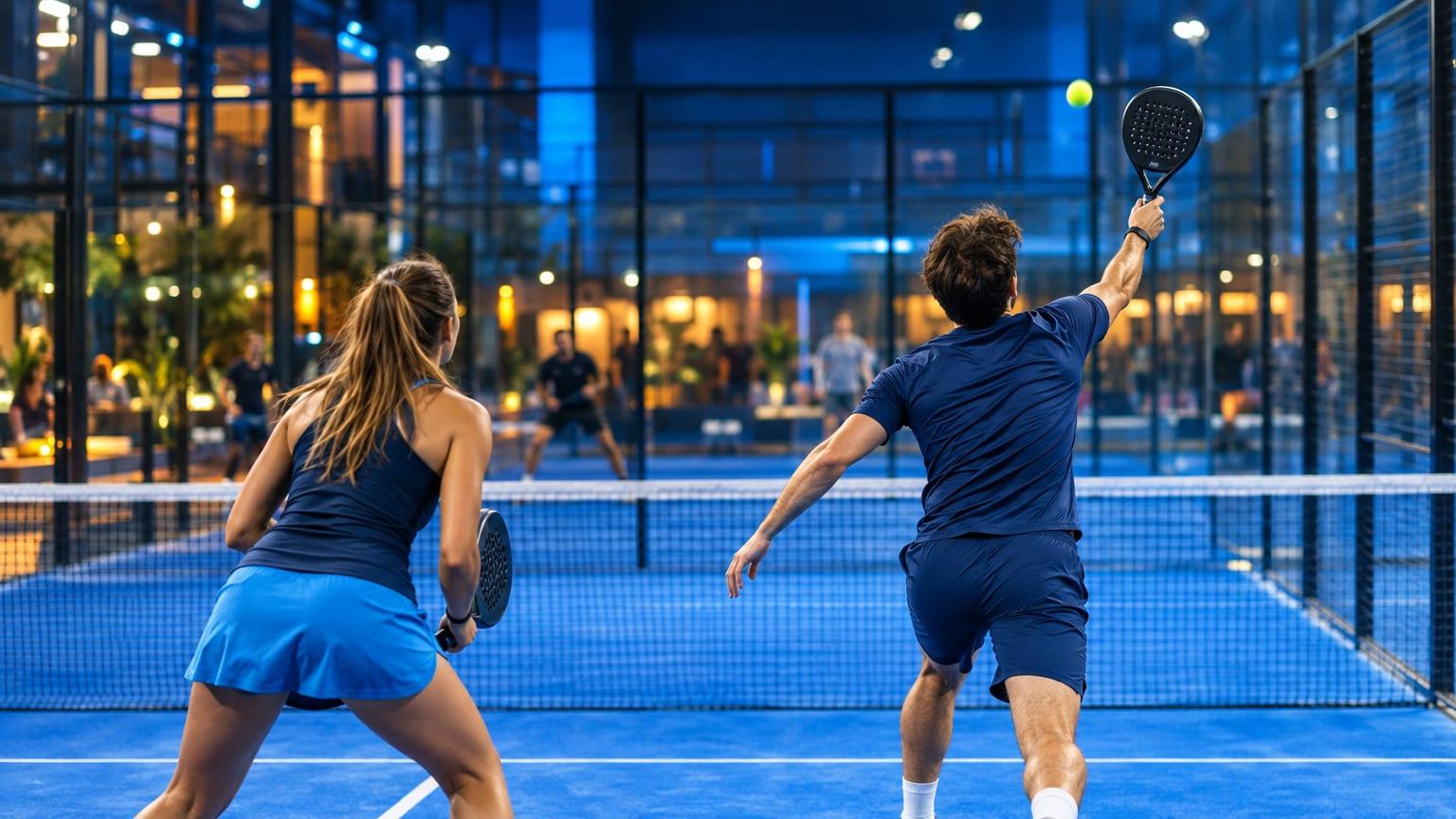
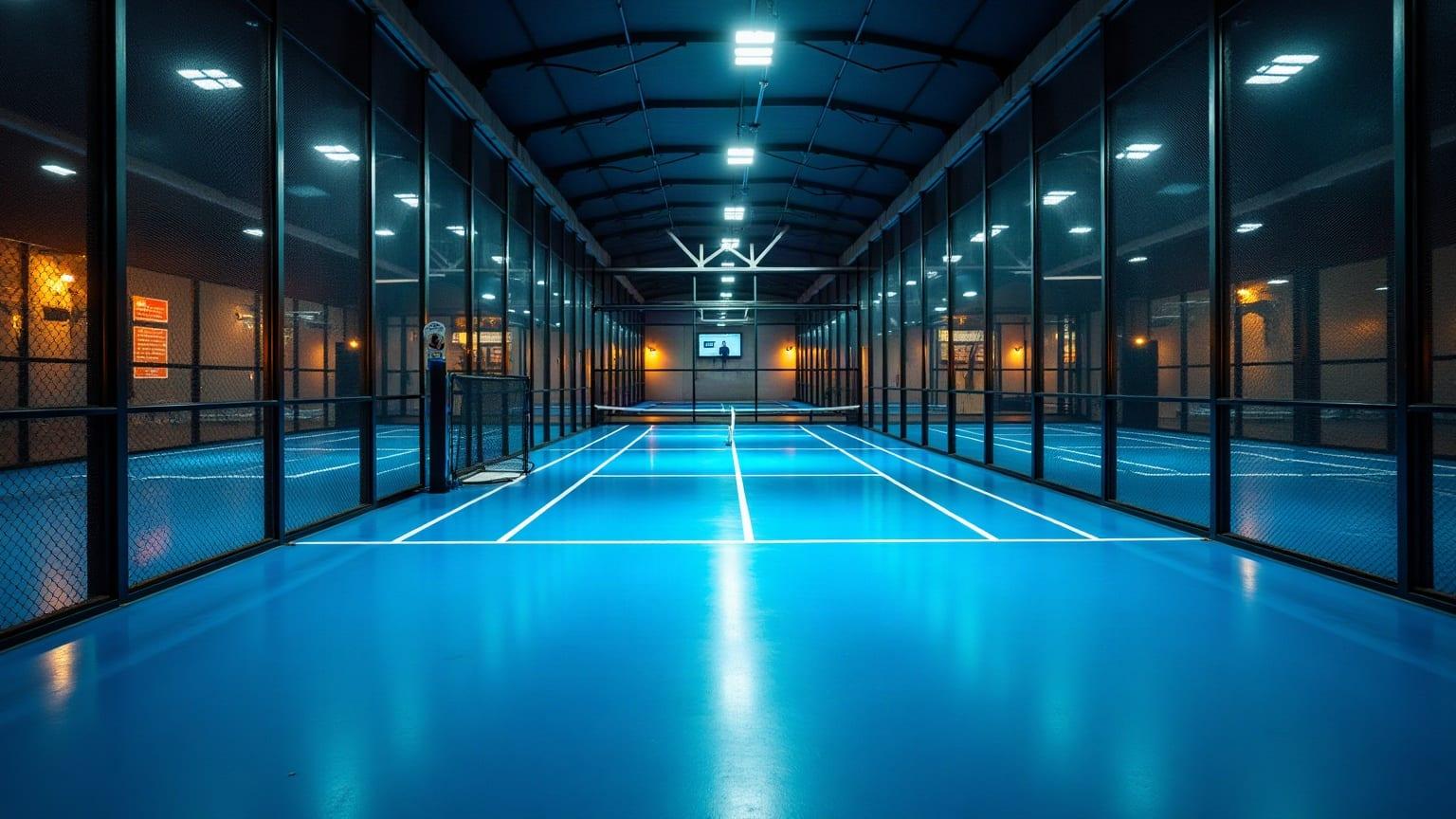
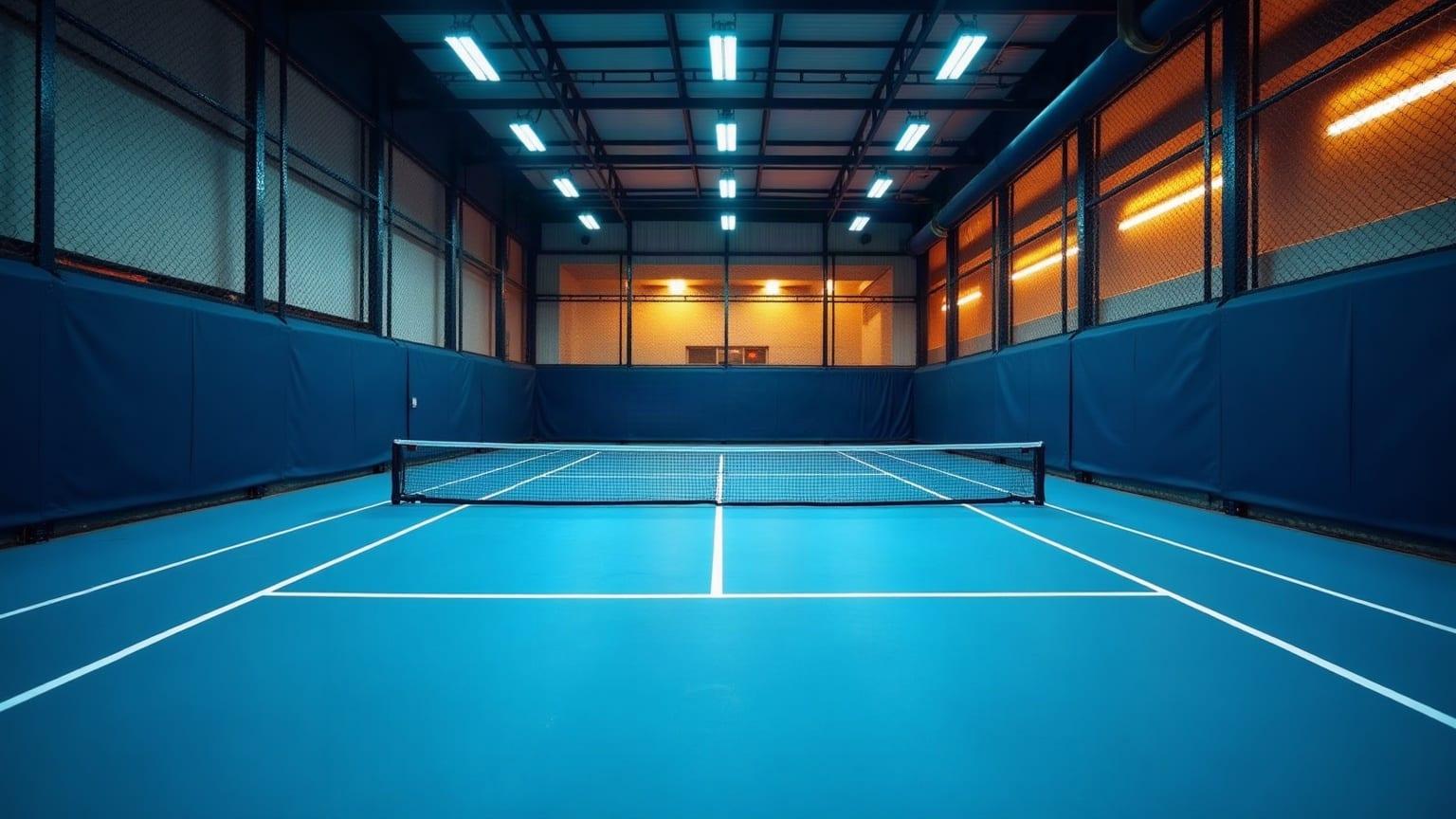
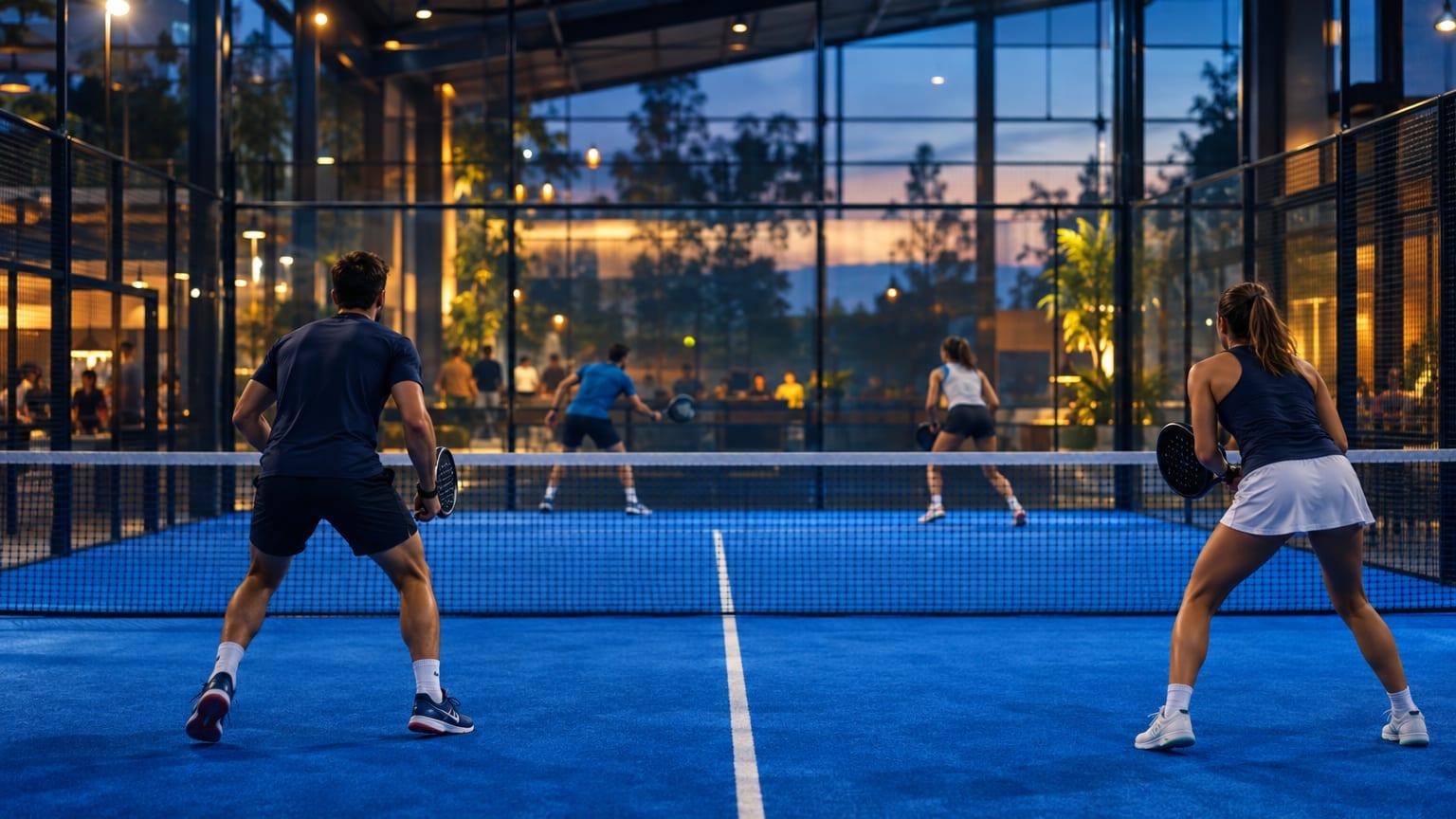
A padel court is much smaller. It measures 20 meters by 10 meters, or roughly 66 feet by 33 feet, and it is almost always played as doubles. The net runs across the middle, and each side has a service line a few meters from the net. The size changes how the sport feels. There is less running, shorter distances between you and your partner, and far more of the game happens at close range.
The smaller court is a big reason padel feels social. With four people packed inside a compact space, conversation is easy, mistakes are shared, and rallies tend to include everyone on court. In tennis, doubles partners can spend long stretches separated by an entire half court.
The walls
The walls are the defining feature of padel. A padel court is surrounded by glass and mesh, and the ball is allowed to bounce off them. In tennis, once the ball bounces and flies past the baseline, the point is over. In padel, a ball that bounces off the back wall or side wall can still be played, as long as it has already bounced on the court first.
That one rule changes everything. A shot that would be a clean winner on a tennis court, such as a hard drive into the corner, often comes straight back off the glass in padel. Rallies last longer, defence is rewarded, and the player who keeps calm and waits for a chance often beats the player who hits hardest.
Reading the walls is the skill that takes the most time to learn. A beginner will often stand too close to the glass and get jammed, or will chase a ball that is going to come back anyway. With practice, you learn to let the ball come off the wall and meet it with a short, controlled swing. The what is padel guide covers how the court and walls work in more detail.
How the walls change strategy
Because the ball comes back, the best position in padel is at the net, which both players on a team try to win and keep. Staying back near the glass is a defensive posture, used to survive a hard shot and return it with a lob or a soft shot over the net. In tennis, strong baseline players can win entire matches without ever volleying, which is almost impossible in padel.
Scoring
Padel uses the same scoring system as tennis: 15, 30, 40 and game, with deuce and advantage when the score reaches 40 each. Games build into sets, and matches are usually played as the best of three sets. A player who knows tennis can follow a padel scoreboard immediately.
There is one common variation. Many padel matches use a golden point at deuce, which means that when the game reaches 40 each, one single point decides it, and the receiving side usually chooses which player receives. Some tournaments and casual games use it to speed up matches, while others use traditional advantage scoring. It is worth asking which one applies before you start. The padel rules and scoring guide goes through exactly how a point, a game and a set work.
For anyone who plays tennis, scoring is the one thing you do not have to learn. For anyone who does not, it is the same system millions of people already know from watching matches on TV.
The serve
The serve is where the two sports feel most different.
In tennis, the server throws the ball up and hits it overhead, and a strong serve is one of the most powerful weapons in the game. Servers get two attempts, and aces and service winners are common at higher levels.
In padel, the serve is underhand. The server must let the ball bounce on the ground behind the service line and then hit it at or below waist height, sending it diagonally into the opposite service box. Like tennis, the server gets two attempts. Because the serve is underhand, it is a way to start the point, not a weapon. Aces are rare, which means the returner almost always has a chance to play the ball.
After the serve, the ball must bounce in the correct service box before it can touch a wall, and the returner can take it off the wall or before it hits the wall, depending on position. That detail confuses beginners at first, but it becomes natural quickly.
Why it matters for beginners
A tennis serve takes a long time to learn, and many beginner tennis points end with a double fault. A padel serve takes a few minutes. That alone removes a major source of early frustration, and it is one reason padel points start sooner and last longer in a first session.
Equipment
Tennis uses a strung racquet. The strings absorb and return energy, which is part of why a tennis ball can be hit so hard, and the racquet is relatively long and light.
Padel uses a paddle, not a racquet. It is solid and stringless, usually made from carbon fibre or fibreglass over a foam core, with a pattern of holes drilled through the face. The handle is short, and the whole paddle is shorter and a bit heavier than a tennis racquet. There are no strings to break or replace, and the grip is more like a table tennis bat than a tennis racquet.
The ball is similar to a tennis ball but is slightly less lively. It is pressurised, with a felt cover, and it bounces a bit lower, which is why it plays well off the walls without flying out of control.
For a beginner, the equipment difference matters in a practical way. A tennis racquet takes time to control, particularly on the backhand. A padel paddle is shorter and gives you more control at close range, so most people are making clean contact within minutes. If you want to learn how a pickleball paddle compares, see how to choose a pickleball paddle.
Trying before you buy
You do not need to own anything to try padel. Pickle N Pins offers racket and ball rentals for its padel courts, and the pricing page lists current rental and court rates. Many players rent for a few sessions before they invest in their own paddle.
The learning curve
Which sport is easier to learn depends on what you mean by easy, but for most beginners padel is gentler at the start and tennis is gentler at the very end.
Starting out
In tennis, a complete beginner typically spends their first weeks struggling with the serve, hitting the ball over the net, and keeping it inside a big court. Rallies are short, and a lot of the time goes to picking up balls. It can be a slow beginning, and some people give up before they reach the fun part.
In padel, the court is small, the paddle is easy to control, the serve is underhand, and the walls keep the ball in play. A group of four beginners can have a real rally during the first lesson. That quick early success is why padel is often described as one of the easiest racquet sports to start.
Getting good
Neither sport is easy to master. In padel, the depth comes from the walls, tactics and teamwork, including lobs, bandejas and smashes that are hard to execute well. In tennis, the depth comes from technique, such as the serve, the topspin forehand and the one-handed backhand, plus the fitness to cover the whole court for several hours.
A tennis player who tries padel will find some skills transfer, such as footwork, volleys and scoring, and some will not, such as the full swing and the habit of hitting hard from the baseline. Many tennis players describe padel as more about thinking and less about hitting. Their biggest adjustment is usually to stop swinging big and let the ball come to them.
Fitness and effort
Both sports are good exercise, but they ask for different things.
Tennis involves more sprinting and long rallies, particularly in singles. A competitive singles match can be exhausting, with sustained cardio and plenty of stress on the legs and shoulder.
Padel is a lot of short bursts: quick steps, small adjustments and lunges. The smaller court and underhand serve lower the impact on the shoulder, and the doubles format spreads the effort between two people. That makes it an accessible option for a wide range of ages and fitness levels, though it can still make a person breathe hard in a long rally. As always, anyone with a health concern should check with a doctor before starting a new sport.
Who each sport suits
Both sports are fun, and neither one is better. They suit different people and different goals.
Tennis suits you if
- You enjoy individual play and want a singles game.
- You like power, spin and long, athletic rallies.
- You are willing to invest time in technique, especially the serve.
- You have access to a good public or club court and enjoy playing outdoors.
Padel suits you if
- You want a social, doubles-based game with friends or family.
- You want to rally within the first session, with little prior experience.
- You like tactics, angles and shots that use the wall.
- You prefer a game that is easier on the shoulder and plays well indoors.
- You are new to racquet sports, or you are coming back to one after a break.
If you are not sure
Try both. A single session of each will tell you more than any article can. The what is pickleball and how is it different from tennis post covers a third option if you are still choosing.
Playing padel in Metairie and New Orleans
Tennis is available at public courts and clubs around Jefferson Parish and New Orleans, many of them outdoors. Padel is newer to the area, and options are still limited. Pickle N Pins describes itself as the first venue in Metairie to have padel courts, and the padel in Metairie page lists open play, lessons, leagues and clinics, along with rental rackets and balls. Courts are indoors, so a summer storm will not cancel your game.
The where to play padel near New Orleans guide compares the local options, and the booking page is where court time is reserved. For a group, padel works well as the main activity of an evening, with food and a drink afterwards, since the venue has a full bar and kitchen.
Hours are 9AM to 10PM Sunday through Thursday and 9AM to 1AM on Friday and Saturday. If you are a tennis player curious about padel, bring a friend, rent equipment, and plan on a first session of an hour. You will probably be rallying in the first ten minutes.
A quick summary
Here is the comparison in a nutshell.
- Court: Tennis uses a large open court. Padel uses a smaller, fully enclosed court.
- Walls: Tennis has none. In padel, the ball can be played off the glass and mesh after it bounces.
- Scoring: The same, with golden point used in some padel games.
- Serve: Overhead in tennis, underhand in padel.
- Equipment: A strung racquet in tennis, a solid stringless paddle in padel.
- Learning curve: Padel is quicker to enjoy, while both take years to master.
- Format: Tennis is played as singles or doubles, while padel is almost always doubles.
Neither sport replaces the other. They scratch a similar itch in very different ways, and plenty of people end up playing both.