A date night built around an activity beats another round of sitting across a table, because there is something to do together besides talk, and something to talk about besides work. Pickle N Pins in Metairie puts pickleball and padel courts, duckpin bowling, axe throwing, Krazy Darts, shuffleboard, an arcade and a full bar and kitchen under one indoor roof, which makes it easy to build a whole evening, activity first and dinner second, without driving anywhere in between.
Most of what follows is true of an activity date anywhere, not only here: what makes an activity actually work for two people, how to pick one that matches how the evening is meant to feel, how it differs for a brand-new couple versus two people who have been together for years, and how to fold food and drinks into the plan instead of treating them as a separate stop.
Why an activity beats another dinner reservation
A restaurant reservation puts two people across a table with nothing to do but talk, which is fine on a first date and can start to feel routine by the tenth. An activity date changes the shape of the evening: there is a shared task, a bit of friendly competition, and natural pauses that fill themselves instead of needing to be filled with conversation. It also removes the pressure of carrying a whole evening on talk alone, which is exactly the pressure that makes an early date feel more like an interview than a night out.
The other advantage is pacing. A good activity date has a rhythm built in, a game, a round, a frame, that gives the evening a natural start and a natural stopping point, rather than an open-ended dinner that either wraps up too early or drags once the conversation runs dry. Because the activity itself sets the clock, neither person has to decide when the date should end; the last frame or the last game does that on its own, and dinner afterward can run as long or as short as the two of you want.
An activity date also gives both people something to look back on that isn't just a meal. A round of duckpin bowling or a session on a padel court becomes a shared reference point, an inside joke about who won, a story about a bad throw, in a way that a dinner conversation rarely does on its own.
What to look for in a date-night activity
Not every activity works for two people the same way it works for a group. The best date-night activities share three things: they do not require much skill to enjoy on the first try, they leave room to actually talk while playing, and they are genuinely more fun with exactly one other person than they are with a crowd.
Skill mismatch is the biggest risk. An activity that rewards a big skill gap, one person who has played for years against someone who has never tried it, can turn competitive fast in a way that is not always fun on a date. Doubles-style court sports and low-pressure games score well here because the format itself keeps a mismatch from turning into a blowout, and a losing rally is still a rally, not a wasted turn.
It also helps to think about how new the relationship is. A first or second date usually does better with something lower-pressure and shorter, an activity that gives you plenty to talk about without asking either person to commit to a long block of time in case the evening doesn't click. A longer-term couple, on the other hand, can usually handle something with a bit more competitive edge, since the two of you already know how the other one takes a loss.
Padel and pickleball: an easy shared court sport
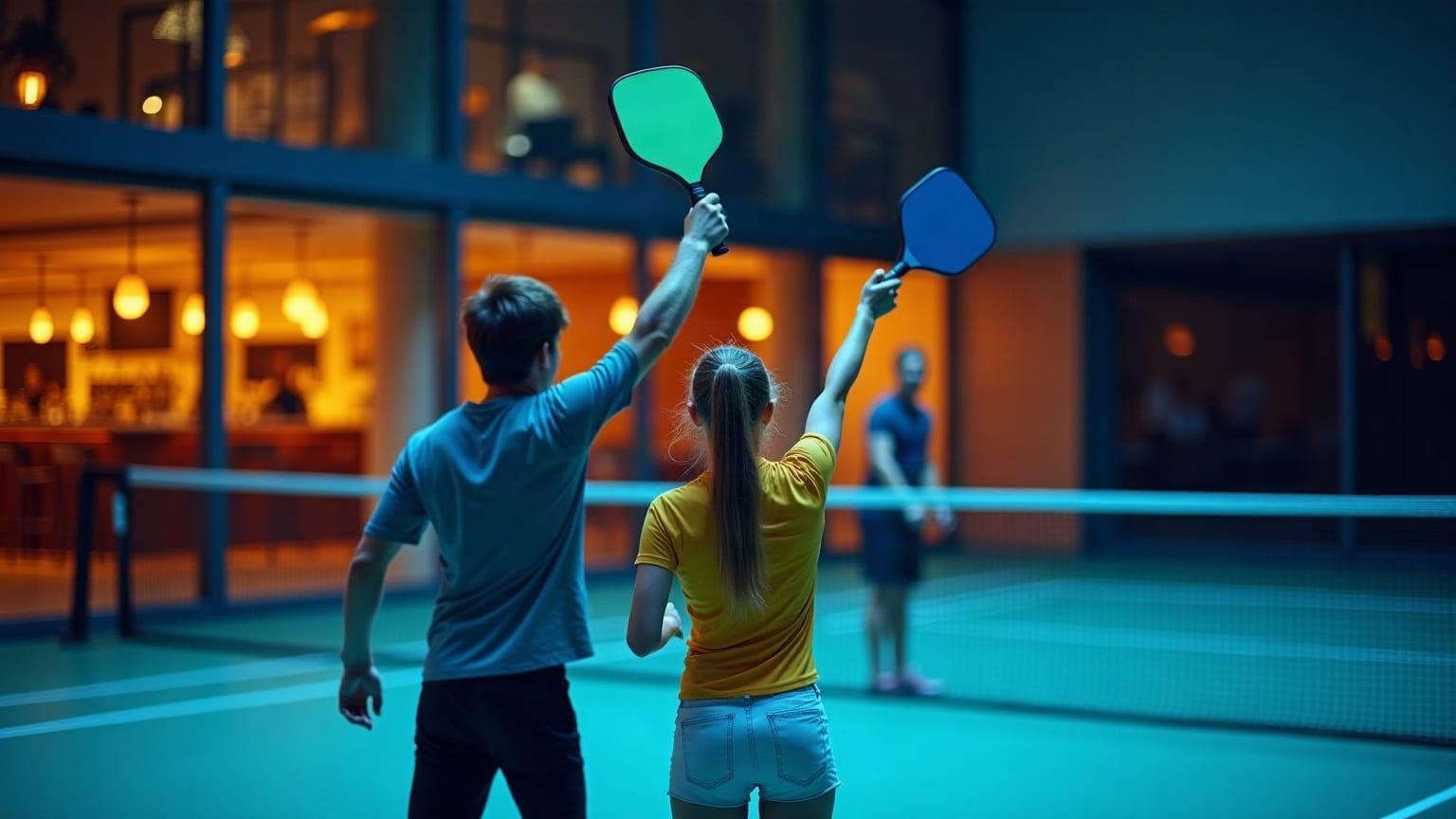
Padel and pickleball both work well for two people specifically because they are built around doubles play, not solo competition, so a couple can rally together instead of purely against each other, or team up against another couple for a livelier evening. Padel is played inside a walled and screened court, and rewards positioning and touch more than raw power, which keeps a mismatched pair in the point longer than a harder-hitting sport would; our what is padel guide covers how a match actually plays out. Pickleball uses a solid paddle and a plastic ball on a smaller court, and most first-timers are rallying back and forth within a game or two, which our pickleball for beginners guide walks through in more detail.
Both are booked and priced by the court per hour rather than per player, so two people booking a single court are simply splitting one rate between them, and neither has to sit out while the other plays. If one of you has played before and the other hasn't, our padel vs pickleball comparison is worth a read before you pick which court to book, since the two sports reward slightly different instincts, and knowing which one favors your particular skill gap can save an evening from feeling one-sided.
Padel and pickleball both work well for two people specifically because they are built around doubles play, not solo competition, so a couple can rally together instead of purely against each other, or team up against another couple for a livelier evening. Padel is played inside a walled and screened court, and rewards positioning and touch more than raw power, which keeps a mismatched pair in the point longer than a harder-hitting sport would; our what is padel guide covers how a match actually plays out. Pickleball uses a solid paddle and a plastic ball on a smaller court, and most first-timers are rallying back and forth within a game or two, which our pickleball for beginners guide walks through in more detail.
Both are booked and priced by the court per hour rather than per player, so two people booking a single court are simply splitting one rate between them, and neither has to sit out while the other plays. If one of you has played before and the other hasn't, our padel vs pickleball comparison is worth a read before you pick which court to book, since the two sports reward slightly different instincts.
Lower-key options: duckpin bowling, shuffleboard and darts
Not every date needs to be physical. Duckpin bowling uses a smaller ball and shorter pins than standard ten-pin bowling, with three rolls per frame instead of two, which keeps the pace quick and the pressure low; our what is duckpin bowling guide covers how a frame plays out for anyone who has never rolled a duckpin ball before. It is an easy activity to talk through while playing, since there is real downtime between turns while pins are reset, which is exactly the kind of built-in pause a good date-night activity should have.
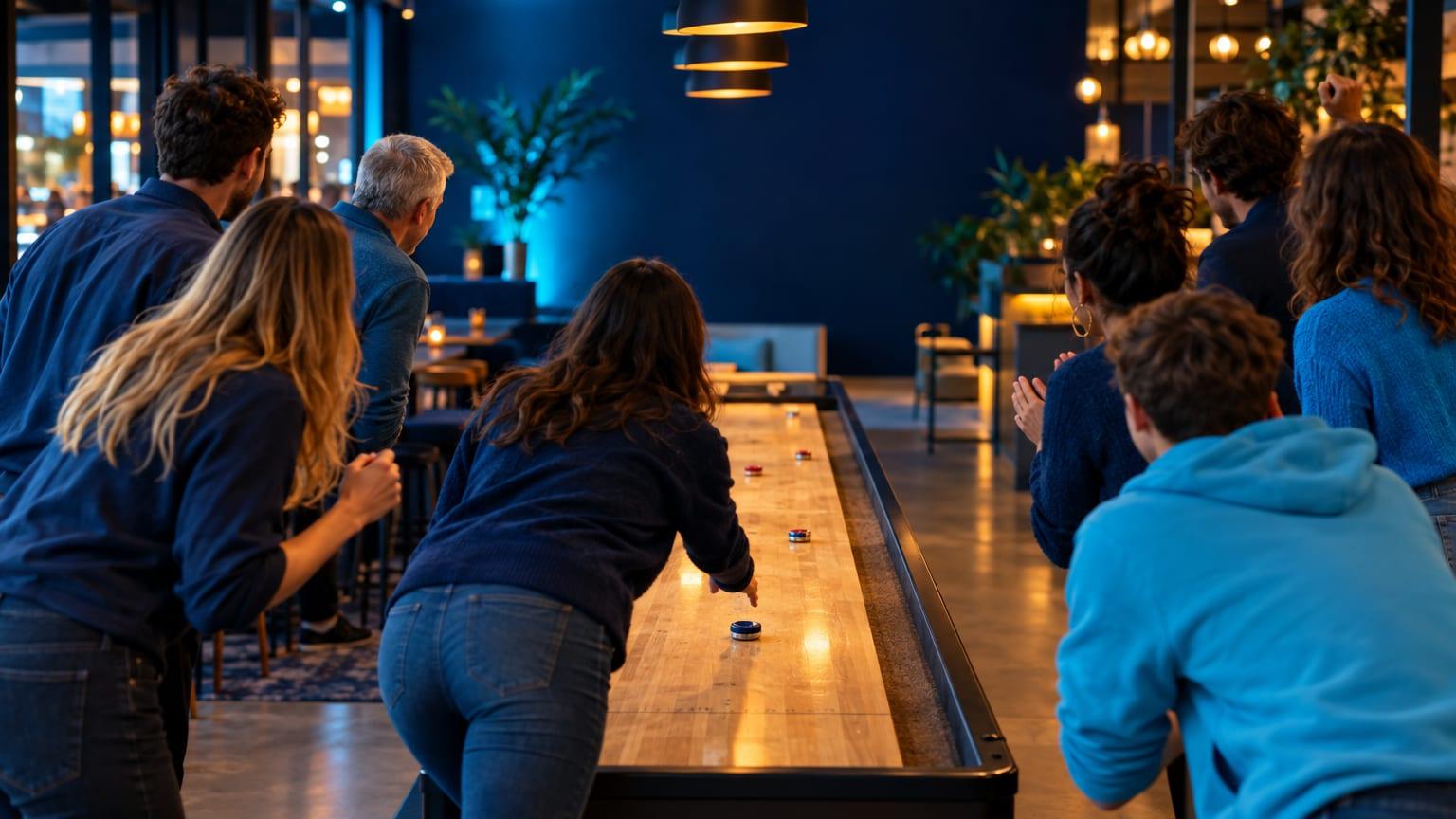
Shuffleboard and Krazy Darts sit in the same category: neither takes long to learn, both reward a light touch over raw force, and both leave plenty of room for conversation between turns. Krazy Darts tracks scores automatically on an electronic board, which removes any argument about who actually won; our darts rules for beginners guide is a quick read before your first round if neither of you has played. Shuffleboard, in particular, rewards a steady hand more than strength, so it tends to level the playing field between two people who might not be evenly matched in a more physical sport.
Axe throwing, for a date with a little more edge
For a date that wants a bit more adrenaline than a rally or a frame, axe throwing is the sharper option, literally. It is a supervised lane activity, staff walk every group through the safety basics before the first throw, and it rewards a controlled, repeatable motion more than raw strength, which again keeps a skill gap from turning lopsided. Axe throwing requires players to be at least twelve years old and to wear closed-toe shoes, worth knowing if either of you is planning to show up in sandals expecting to throw. Our axe throwing for beginners guide covers what an actual session looks like, start to finish, which is worth reading beforehand if the idea of throwing a hatchet on a first date feels more intimidating than it needs to.
It's also simply a good conversation starter. Coaching each other through a throw, cheering a bullseye, laughing at a miss, gives an evening a bit of shared adrenaline that a quieter activity doesn't, and it tends to be memorable in a way that makes for a good story afterward, whether the date goes well or the axe just never quite sticks.
Making a night of it: food, drinks and the room around you
An activity date works best when food and drinks are folded into the same evening rather than treated as a separate errand afterward. Pickle N Pins runs a full bar and kitchen on site, with a menu covering appetizers, salads, tacos, sliders, wings and pizza, so there is no need to leave the building or plan a second stop once the game wraps up. TVs around the bar and a large LED wall TV in the yard game area give the room a lived-in, sports-bar energy that works well for an evening that is casual rather than formal, closer to a lively night out than a quiet dinner date; if that is specifically the vibe you're after, our sports bar in Metairie guide covers that side of the venue on its own.
Sitting down for food right after the activity, rather than mid-game, keeps the evening from feeling rushed on one end and dragged out on the other. A round of a free backyard game, cornhole, washers or table tennis, is also an easy way to keep the night going a little longer once you've eaten, without booking anything else, and it's a low-key way to close out an evening that started with something more structured.
A few planning notes specific to Metairie
Pickle N Pins is open Sunday through Thursday from 9AM to 10PM, and Friday and Saturday from 9AM to 1AM, which gives an evening date real room to run long on a weekend without needing to watch the clock. A weekday evening tends to be quieter than a Friday or Saturday night, worth knowing if you would rather have a court or lane closer to yourselves than share the busiest slot of the week with everyone else who had the same idea. If a specific court time matters to the evening, booking it ahead rather than showing up and hoping is the safer move, especially on a weekend.
If activity dates turn into a regular thing, it's worth knowing a couples membership exists specifically for two people who want ongoing access rather than booking one evening at a time; the activities page lays out everything on offer side by side, which is a useful place to start if you haven't settled on a first pick yet.
Common date-night mistakes to avoid
A few planning mistakes show up again and again on activity dates, and most of them are easy to sidestep with a little forethought. Trying to pack too much into one evening, a court sport, then bowling, then axe throwing, all in one night, usually means rushing through everything and enjoying none of it fully; picking one anchor activity and letting the rest of the evening build around it tends to work better than a checklist.
Ignoring the skill gap between two people is another common one. If one person plays a sport competitively and the other has never touched it, a serious, scored match may not be the fun evening either of you had in mind; leaning toward a doubles format, a lower-pressure game, or simply agreeing up front that the score doesn't matter tonight can keep the evening feeling like a date rather than a competition. Finally, showing up without a reservation on a busy weekend evening is a common way to spend more of the date waiting than playing, so it's worth booking the activity ahead rather than treating the whole plan as a walk-in.
The bottom line
An activity-first date night works because it gives two people something to do together instead of only something to talk about, and Pickle N Pins fits that shape well: padel and pickleball for a shared court sport, duckpin bowling, shuffleboard and darts for something lower-key, axe throwing for a bit more edge, and a full bar and kitchen to fold food into the same evening. Pick one activity rather than trying to fit in three, book ahead for a weekend evening since that is the busiest slot of the week, and let the free backyard games or the bar carry the night a little longer once the main activity wraps up.