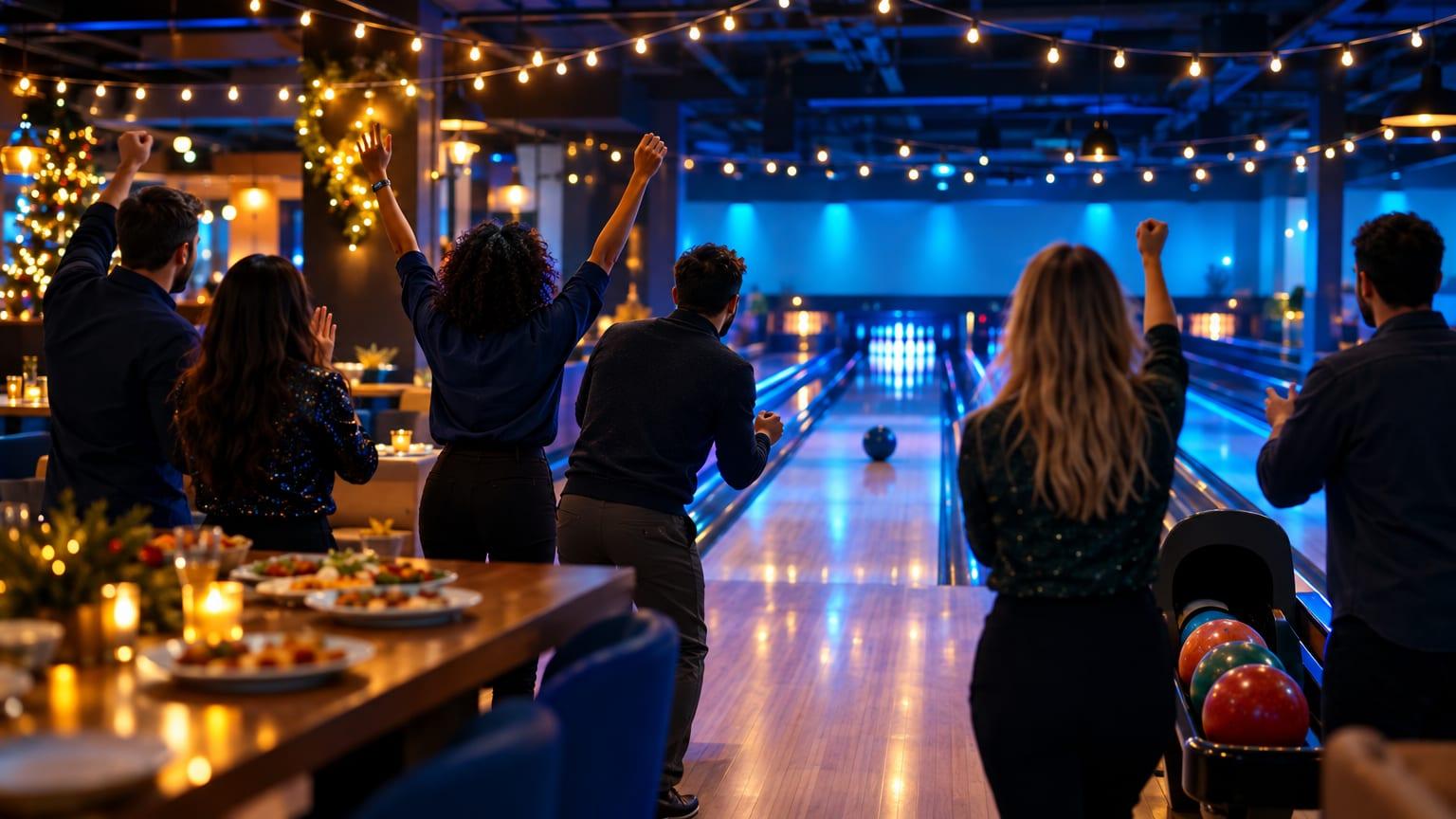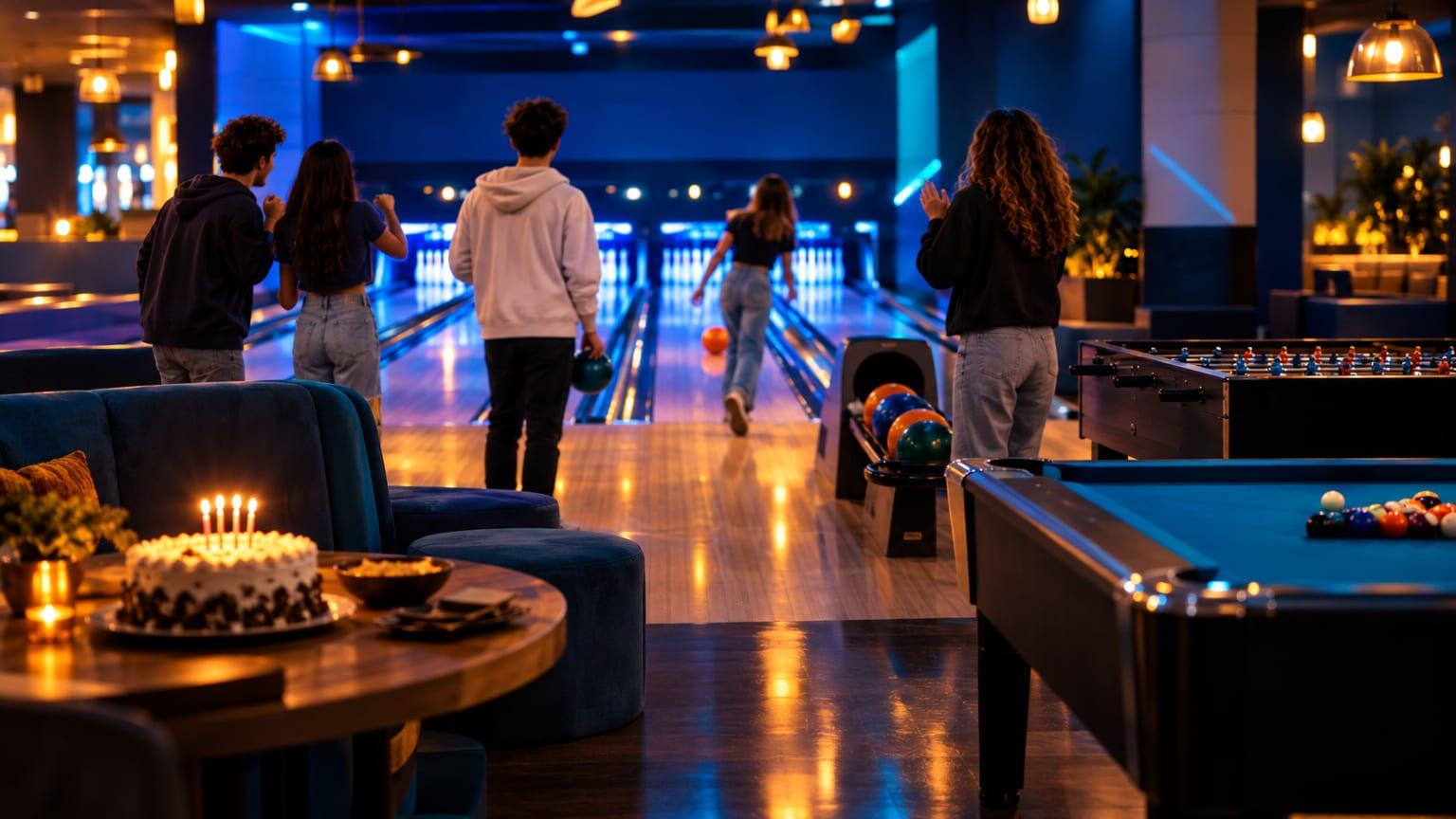
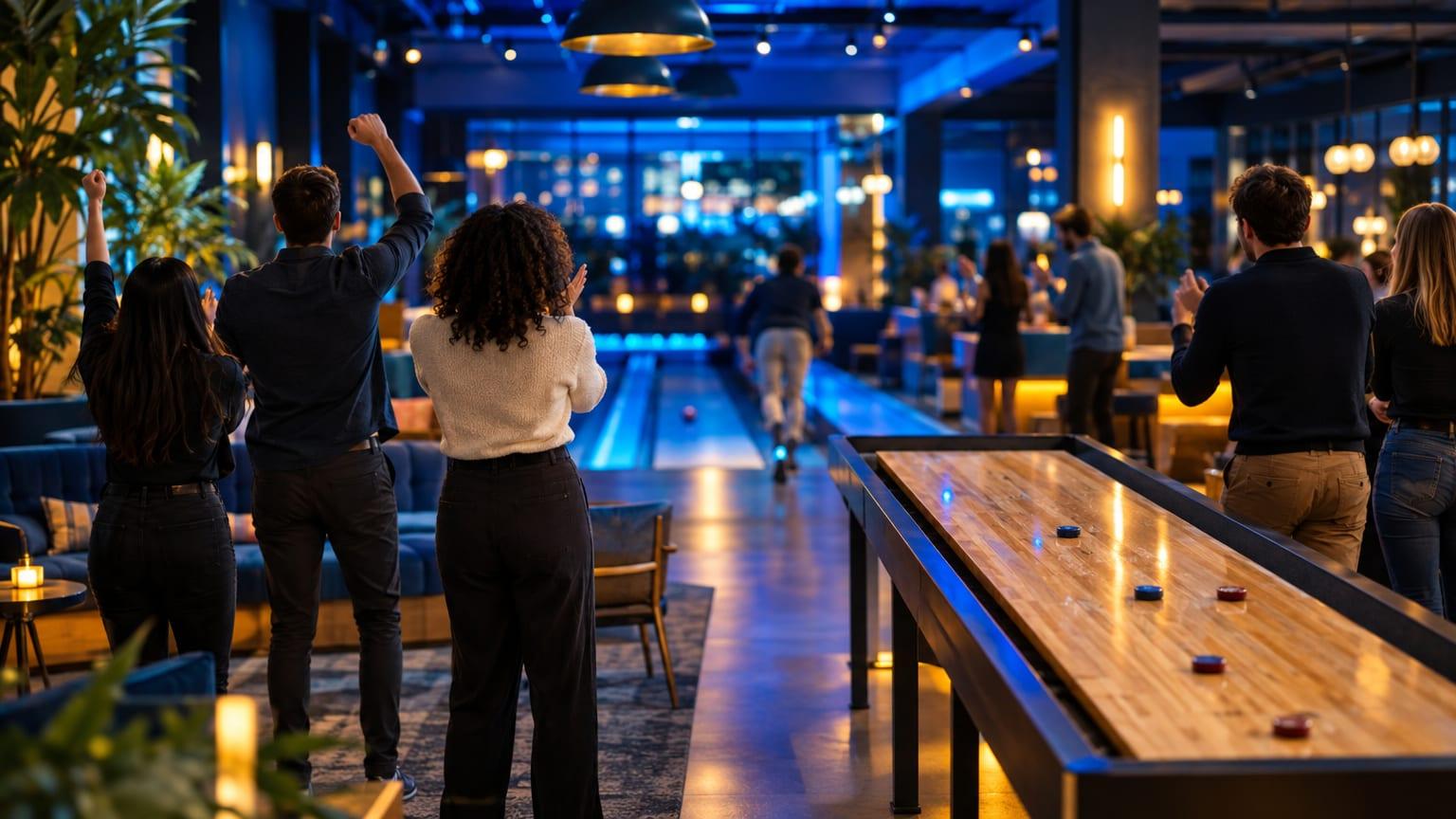
The best team-building activities are the ones people would choose to do on a Saturday: a little competition, a lot of talking, and no one singled out for being bad at it. A good plan mixes a main activity that gets everyone moving or throwing or sliding with quieter options nearby, so the group can drift between them. This guide is about choosing and structuring those activities, whether your team is six people from one department or sixty from three offices. If you are planning a full company outing with a budget and a headcount to wrangle, the separate corporate team outings near New Orleans guide covers the logistics side. This one is about the harder question underneath: what should the team actually do?
Most of it applies anywhere. The last sections cover what is available in the Metairie area and at Pickle N Pins, which has six ticketed activities, free backyard games, an arcade, and a full bar and kitchen under one indoor roof.
What team building is actually for
Team building has a reputation problem. Many people hear the phrase and picture trust falls, forced icebreakers and a facilitator with a whiteboard. That reputation is earned, because a lot of team-building events focus on the format of bonding rather than the experience of it. The result is an afternoon people endure.
The goal, stripped down, is simple: help people who work together get to know each other as people, so that ordinary work gets a little easier. That usually happens through shared experience, mild stakes and some laughter. A coworker who beat you at darts and then bought you a drink is a coworker you will email without a second thought.
Three things tend to separate an event people enjoy from one they dread.
- Choice. People enjoy things more when they picked them, or at least when they could opt for something else nearby.
- Low stakes. A competition with a trophy is fun. A competition with consequences is stressful.
- A reason to talk. Activities that include natural pauses, such as waiting for a turn, give people room to chat without forced conversation.
Keep those three in mind as you read the rest. They are a useful filter for every idea below.
Mixing competitive and casual options
Teams are not uniform. In any group you will have a person who loves to compete, a person who will happily do anything as long as there is food, and a person who dreads being watched while they try something new. A good event has room for all three.
Why a single activity often fails
If the entire event is one competitive game, the competitive people will thrive and everyone else will quietly check the time. If the entire event is a relaxed mingle, the competitive people get bored and the quieter people are left searching for someone to talk to. Neither outcome is a failure on its own, but neither builds much connection.
Build in a spectrum
A workable approach is to pair one structured, competitive activity with one or two casual ones, then let people move between them. Examples of casual options include table games, backyard games and an arcade, none of which require a booking or a rulebook. Competitive options include court sports, bowling lanes and throwing lanes, where there is a clear score and a clear winner.
At Pickle N Pins the pairing is already built in. The six ticketed activities are pickleball, padel, duckpin bowling, axe throwing, Krazy Darts and shuffleboard. Alongside them there are free backyard games, including cornhole, washers, table tennis, foosball and Connect 4, plus an arcade. A team can book a couple of ticketed activities and let the free games fill the gaps, which is the casual-competitive mix in practice. The activities overview shows all six side by side.
Team formats that work
How you divide the group matters as much as which activity you pick. A bad split can make a fun game miserable, and a good one can make a mediocre game memorable.
Mixed-department teams
If you want the event to build connections, break up existing groups. Assign people to teams so that each one has members from different departments or levels of seniority. This is especially effective in a doubles format, where two people have to work together to win a point. A new hire paired with a director, or someone from finance paired with someone from design, creates a conversation that would not happen at a desk.
Rotating partners
A tournament in which partners change every round gets everyone playing with several different colleagues. Padel and pickleball are well suited to this because both are doubles-first sports. After each short match, the winners split up or the groups reshuffle. By the end of the session, each person has played with and against a good share of the group.
Small-team leaderboards
Individual sports like darts and axe throwing can feel isolating if the leaderboard only shows individual scores. Try teams of three or four, with the team's score the sum of its members. A weaker thrower's score matters less to the team, and the stronger players cheer for them because every point counts. It also gives groups a reason to talk strategy between rounds.
A light prize, not a big one
A small trophy, a silly title or a round of applause is plenty. Large prizes turn friendly games into tense ones, and some of your team will stop playing to have fun and start playing not to lose.
Activities that level the playing field
One of the biggest sources of anxiety at a team event is the fear of looking bad. Activities where skill matters less, or where everyone starts as a beginner, ease that worry.
Games with a low skill ceiling
Duckpin bowling uses a smaller ball and shorter pins than standard ten-pin bowling, and it is easy to enjoy on a first try. The what is duckpin bowling guide covers how a frame works, and duckpin vs ten-pin bowling explains how it differs from what most people grew up with. Shuffleboard is similar: it takes a minute to learn and leaves plenty of time to talk between turns. The shuffleboard page describes it as beginner-friendly.
Activities where everyone is new
Axe throwing is unfamiliar to most people, which works in the team's favor. Nobody on the team is an expert, so the person who does it every weekend and the person who has never tried it are closer in skill than you would expect. The axe throwing for beginners guide covers how it works and how safety is handled. Axe throwing at the venue requires players to be 12 or older and to wear closed-toe shoes, so tell your team in advance.
Doubles sports with a built-in teammate
Padel and pickleball are both played in pairs, and with a mixed-ability pair a stronger player cannot simply overpower the game. If the group has never played either, padel vs pickleball explains which might suit it better. Padel is played inside a walled court where the ball can come off the glass, which tends to extend rallies and give beginners more chances to hit a ball back.
Inclusive options for every kind of team
Inclusion is a practical concern, not just a good idea. A team that includes people with different fitness levels, ages, mobility and comfort with attention needs an event that works for all of them.
- Make the active option optional. Never make a physical activity mandatory. Offer something seated or slower nearby, and do not make anyone explain why they chose it.
- Keep a non-competitive path open. Someone who does not want to play can keep score, cheer, or simply socialise at the bar or at a table.
- Mind the age rules. Axe throwing has a minimum age of 12, and shuffleboard and darts are suggested for ages 8 and up or younger with supervision, so check that an activity fits everyone who is coming, especially if family members are invited.
- Tell people what to wear. Closed-toe shoes are required for axe throwing, and comfortable athletic shoes are a good idea for court sports. A short email beforehand avoids awkward moments on the day.
- Think about food. A kitchen with a range of options is part of inclusion. The menu lists appetizers, salads, chicken and sliders, street tacos and pizzas, so ask your team about dietary needs when you collect headcounts.
- Do not make drinking the plan. There is a full bar, which is fine, but the event should work equally well for people who do not drink.
A quick anonymous poll before the event, asking what people would enjoy and what they would rather skip, often reveals things a manager would never guess.
Structuring the time
An event with a clear shape feels better than one that drifts. Most team events run two to three hours, and a simple structure holds up well.
- Arrival and settling in (15 to 20 minutes). People arrive at different times. Have drinks and something to nibble ready so the first few minutes are relaxed.
- Main activity (60 to 90 minutes). The booked, structured block. Rotate partners or teams halfway through.
- Food and break (30 to 45 minutes). Sit down together. Many of the best conversations happen over a meal.
- Free play (30 minutes or more). Open time for backyard games, arcade, or a second round of whatever people enjoyed most.
Give people a role
Roles lower the pressure. One person can be the scorekeeper, one the team captain, one the photographer. Having a job gives quieter people a way to take part without performing.
Plan for the weather you cannot control
Everything at the venue is indoors, so a Louisiana thunderstorm does not change the plan. For a team that coordinates calendars weeks in advance, that predictability is useful.
Leave the speeches short
If a leader wants to say a few words, do it during the food break, keep it short, and avoid turning the outing into a meeting. People remember how an event felt, not what was said.
Ideas by team size and goal
Different teams want different things, so here are some pairings to adapt.
- A small team of six to ten who already get along. Book a doubles sport such as pickleball or padel and add shuffleboard or darts for the downtime. Rotate partners.
- A new team that is still forming. Choose low-skill activities such as duckpin bowling and shuffleboard, which make conversation easy, and mix department lines deliberately.
- A large group of thirty or more. Split into stations running at the same time, such as bowling lanes, darts lanes and backyard games, with a timed rotation so everyone tries two or three.
- A team that is mostly remote. Plan fewer, longer blocks and more unstructured time. People who rarely meet in person need time to talk more than they need a tournament bracket.
- A team celebrating a win. Lean on the casual side: food, backyard games and a short friendly competition. A celebration should not feel like another performance review.
The Krazy Darts page describes digital scoring and game modes, which suits a group that has mixed experience, since the board handles the arithmetic.
Team building in Metairie and New Orleans
If you are planning an event in the New Orleans area, there are a few ways to approach it. Some teams choose a downtown restaurant or a private room, and others pick an activity venue. Activity venues have the advantage of giving the group something to do, which removes the pressure of generating conversation.
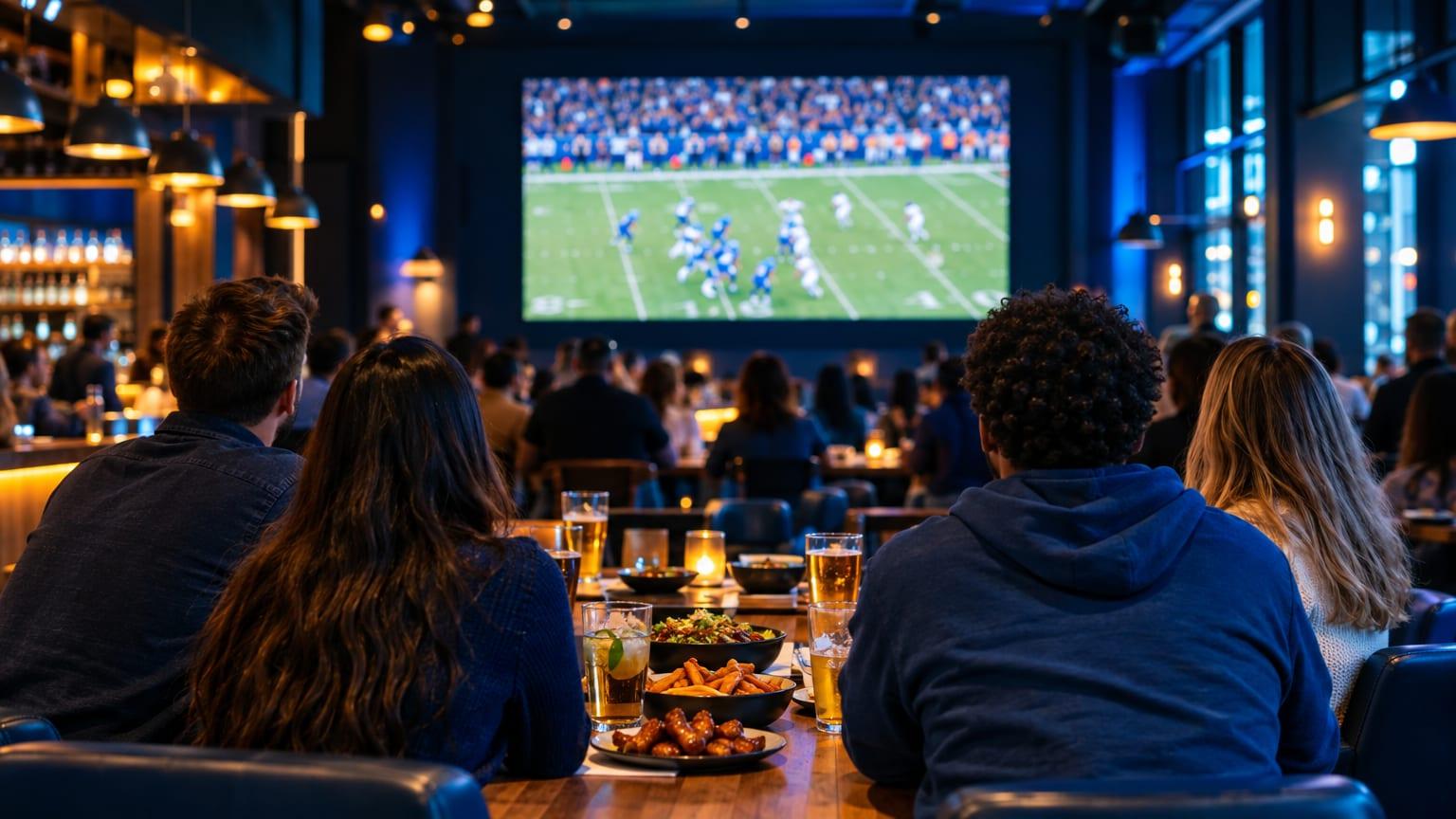
Pickle N Pins in Metairie lists team-building events alongside corporate parties, holiday parties and watch parties on its special events page, which carries an enquiry form for anyone planning a larger gathering. The venue is indoors, has a full bar and kitchen, and has TVs around the bar and a large LED wall TV in the yard game area, which makes it workable for a team that wants to watch a game after the activity.
For a smaller group, the booking page is where individual activities are reserved, and the pricing page has current rates for each activity. Members can reserve up to 14 days ahead, which helps if your team meets regularly. Hours run from 9AM to 10PM Sunday through Thursday and 9AM to 1AM on Friday and Saturday, so a team can schedule an early morning meetup, a lunch, an after-work event or a late evening.
For ideas on a related occasion, the holiday party venues in Metairie guide covers the same kind of planning for seasonal events.
A final checklist
Before you book, run through a few questions.
- Does the plan include at least one competitive and one casual option?
- Can every attendee take part in something, regardless of age, fitness or comfort with attention?
- Have you broken up existing groups so that people meet someone new?
- Does the schedule include food and unstructured time?
- Have you told people about shoes, age rules and arrival time in advance?
- Is the prize small and silly rather than large and serious?
If the answer to each is yes, you have the shape of an event people will enjoy. The activity itself matters less than how it feels to be there, and a team that laughs together at a missed dart is a team that finds the next hard problem a little easier.